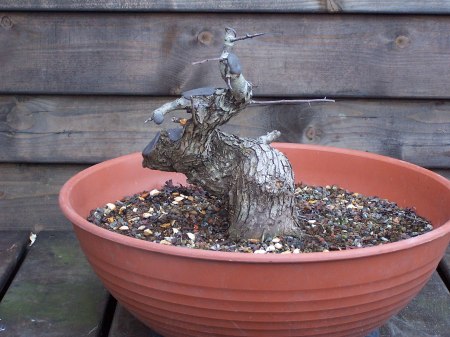
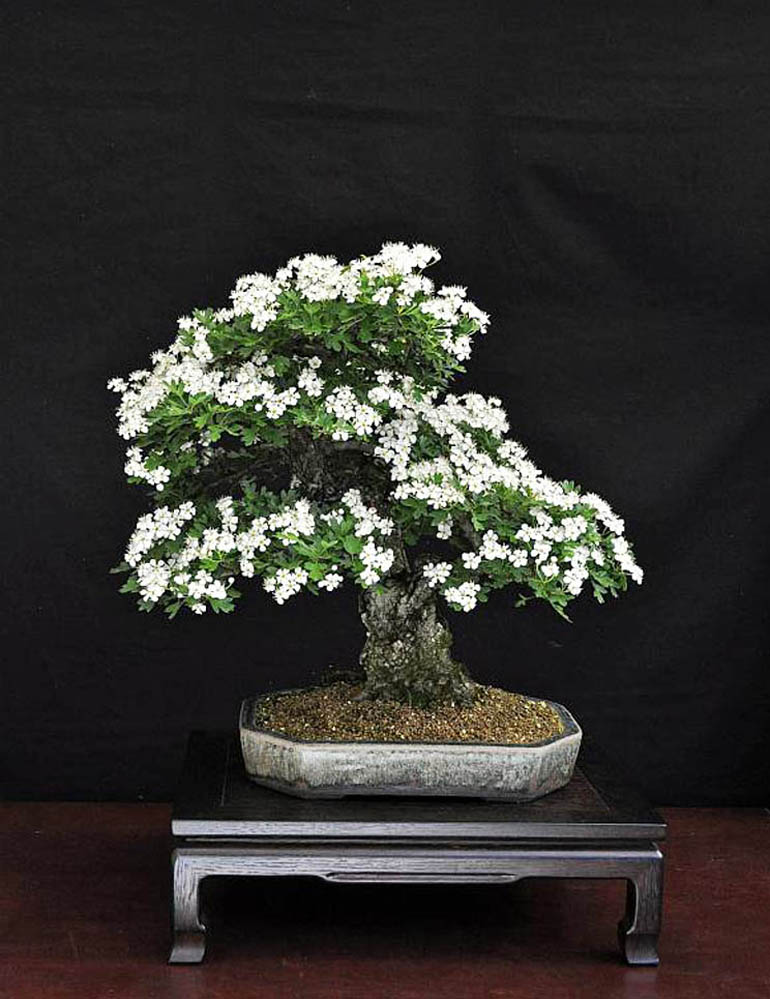
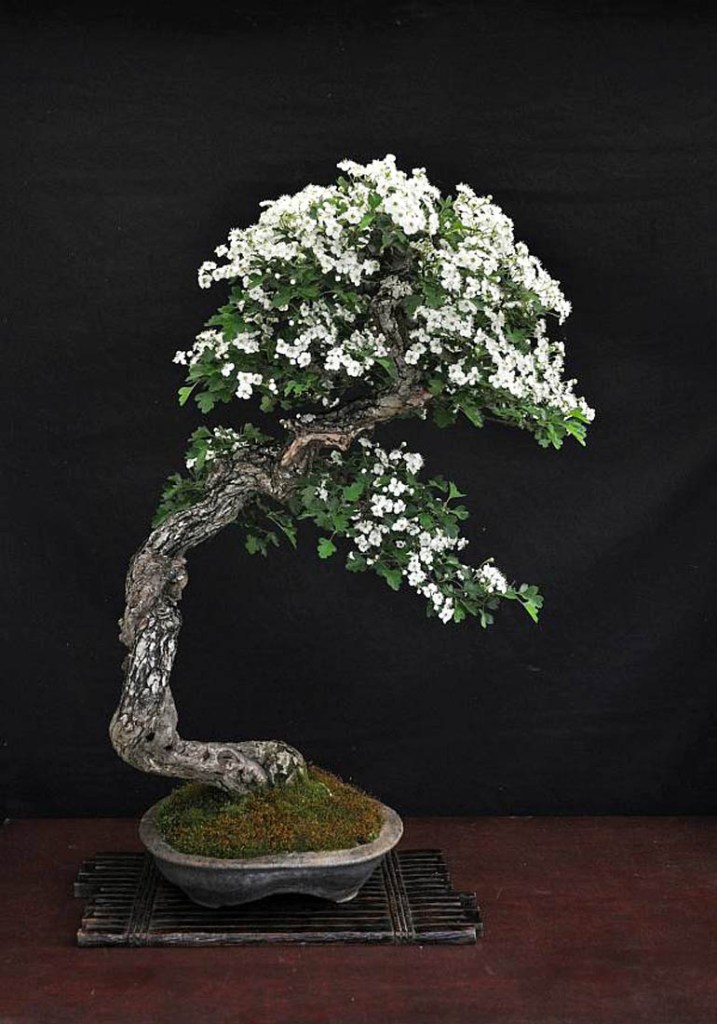
Air Layering (marcotting) A Prunus Mahaleb Yamadori.

Hi, everybody,

today I would like to share with you the Air Layering or Marcot that I performed yesterday on one of the mine Prunes mahaleb Yamadoris.
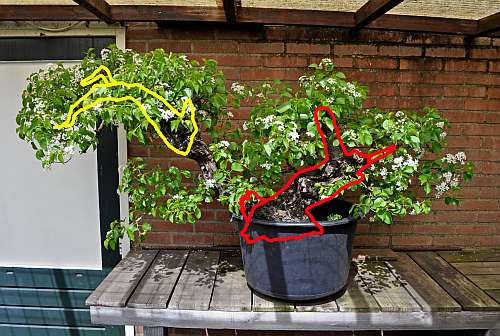
29-4-2016 Wolfie+Prunus 024 hans van meer virtual 500

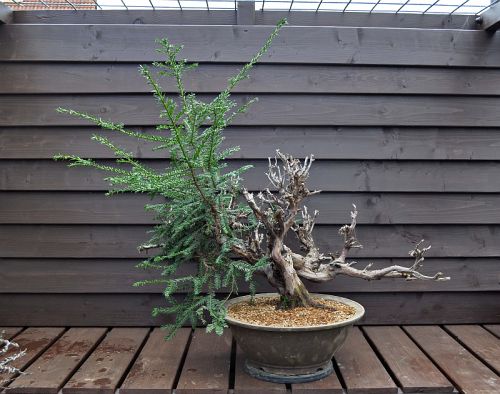
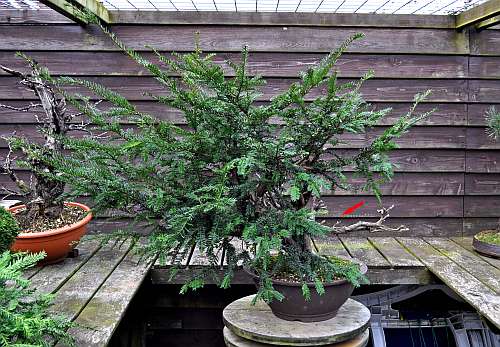
Remember this picture? This is the Prunus mahaleb that is about to be air layered. The left (yellow) section needs to be separated from the right (red) section! This beautiful left section, full of age-old death wood, goes to my dear friend Tony Tickle (UK) and the right trunk/tree section stays with me in Holland…if all goes well that is?!

bark hans van meer 500Before I start a little explanation about the different layers that make up a trunk and branch.

Just look at the quick drawing I made to explain. The bark on the outside of the tree protects the living cambium layer that lies under need it. This cambium layer produces the growth rings adding each season new layers of phloem and xylem to the tree. The cambium layer is a very thin living layer that produces phloem towards the outside where it eventually becomes bark and xylem towards the inside where it becomes sapwood. This all-important cambium layer is responsible for the growth of stems and, important for the technique that I am going to use, the roots! The phloem transports all the food and hormones that are produced by the leaves downwards to the roots. The xylem is basically vascular tissue that carries the water and other dissolved nutrients all the way up to the leaves. 

So now we know this, how does those air layering work?! Where new roots have wanted a strip of bark is removed with the help of a sharp knife or in my case a small iron saw! After the strip of bark with the phloem is removed with the help of a sharp chisel (this was very easy on this Prunus) the thin layer of cambium is scrapped off with a sharp and clean knife! This is very important to do because if the cambium layer is left intact the tree or branch will not be fooled because the flow is not disrupted and most likely will not produce new roots if only the bark and phloem are removed! A sticky paste is made by adding the rooting hormone to water and that is then applied generously around the edge of the wound (on the side closest to the top of the branch or trunk). Then a thick layer of moist (but not soaking wet) sphagnum moss is applied all around the wound. This all is packed in with a piece of transparent plastic that works as a water barrier and allows the sunlight to come through. Holes can easily be made at the top of this plastic if watering the sphagnum moss is later necessary! When enough roots have grown from the wound, this depends on the species and the vigour of the parent tree, the trunk or stem is removed carefully with a saw from the mother tree and is then planted in a training pot. So now we know how to let us see what I did with this old Prunus yamadori?!
17-5-2016 Prunus mahaleb 003 hans van meer 500

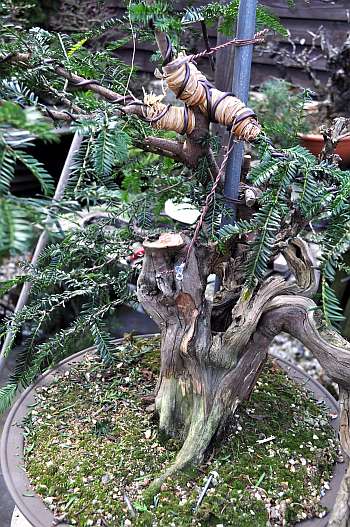
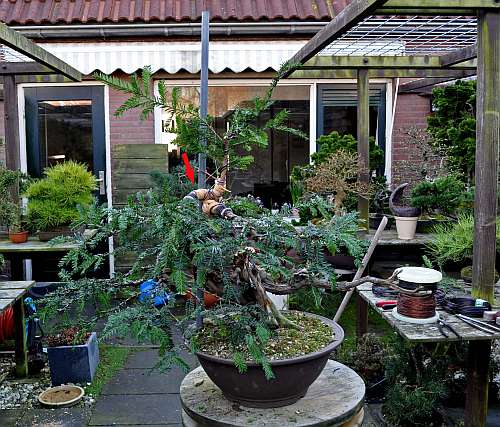
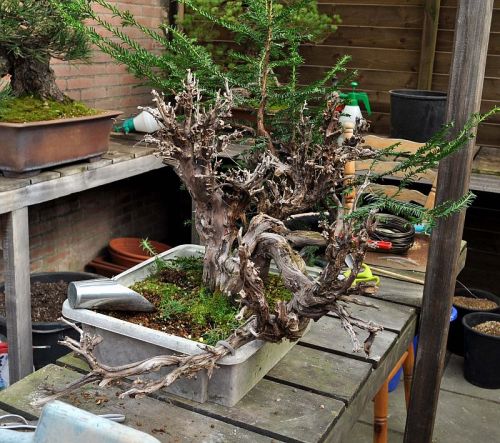
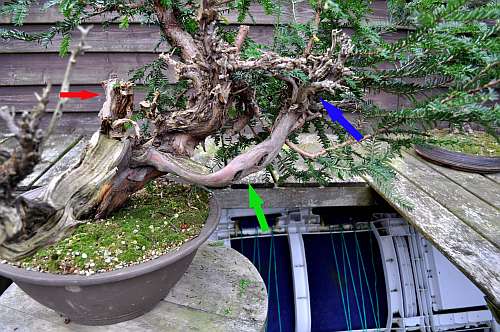
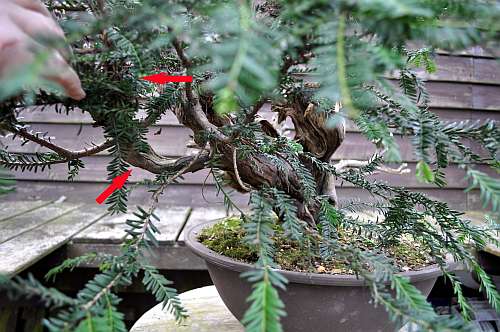
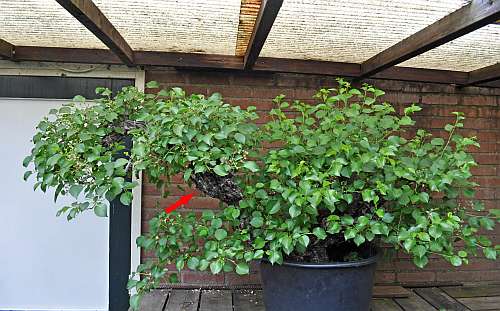
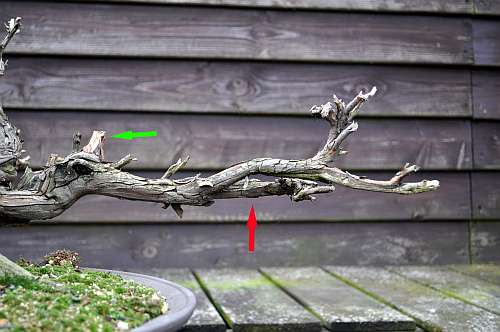
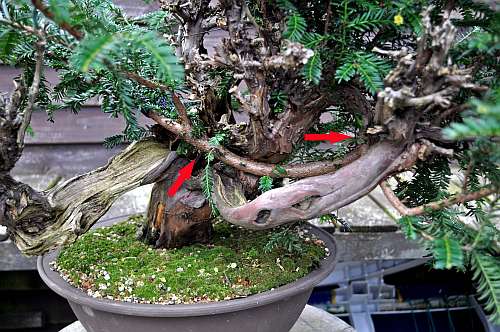
The red arrow shows the point where the air layering needs to be made. This is a thick and old side branch that grows from the lower left side of this massive trunk. This long branch or almost trunk is full of old deadwood and although it those not fit into the design that I have planned for this tree, it would be a shame and almost criminal not to try to save it to become a future Bonsai of its own!! 

17-5-2016 Prunus mahaleb 010 hans van meer 500

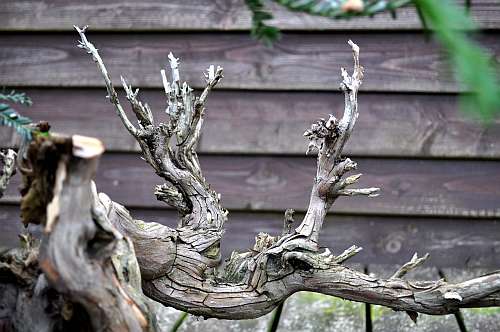
This is more or less where the air layering will be made! This is the widest part of this trunk and therefore will be the best future root base of the new tree when it is separated! This site consists mostly of deadwood and the 2,5 Inch live fain grows mostly on the other side!

17-5-2016 Prunus mahaleb 017 hans van meer 500

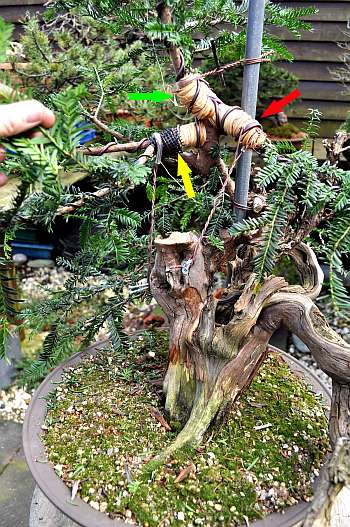
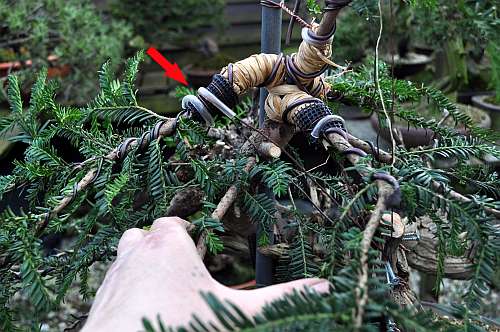
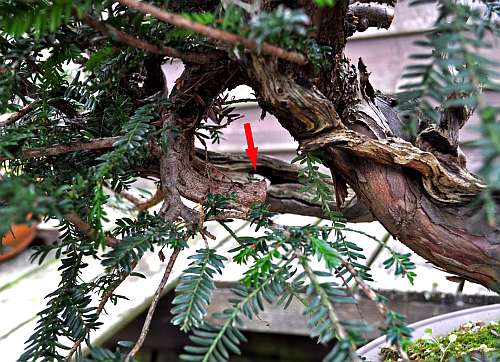
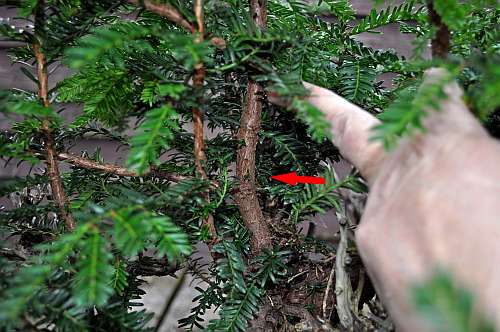
A look at the future air layering from the other side of the trunk. The red arrow points at two branches that need to be removed because they are in the way and because they don’t have a future growing near the future new root base!

17-5-2016 Prunus mahaleb 027 hans van meer 500

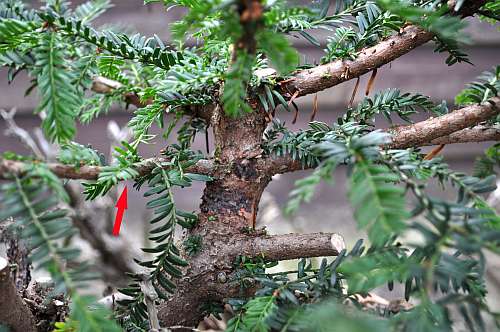
With a concave cutter, they are cut flush with the trunk line and sealed with cut paste. I don’t want any change of infections that close to the new roots!
17-5-2016 Prunus mahaleb 034 hans van meer 500

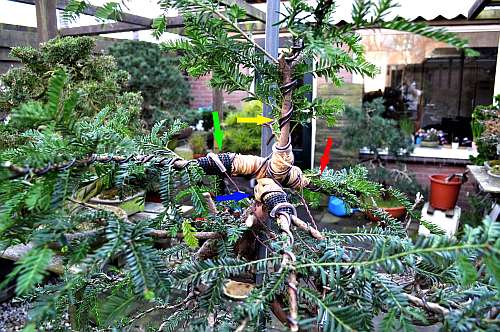
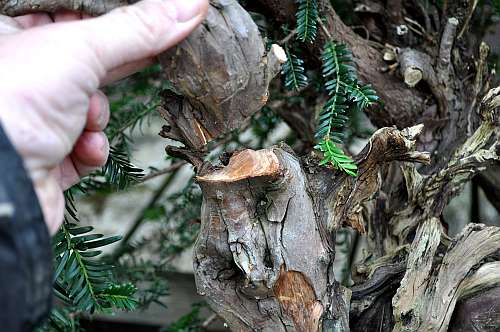
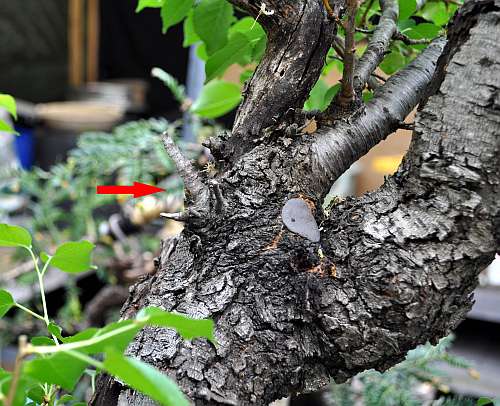
The wound is properly treated and sealed with cut paste! The red arrow points at a Jin that is also in the way of the future marcot and therefore also needs to be removed! Here you can clearly see that this section of the trunk is the widest and there for the logical choice!
17-5-2016 Prunus mahaleb 039 hans van meer 500

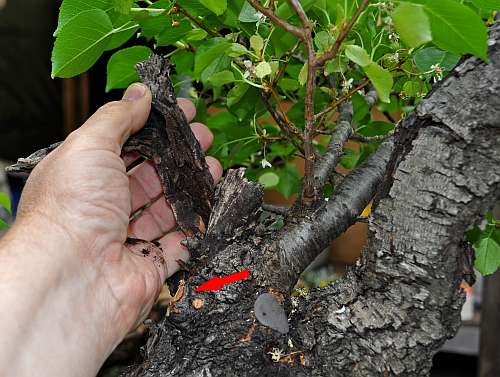
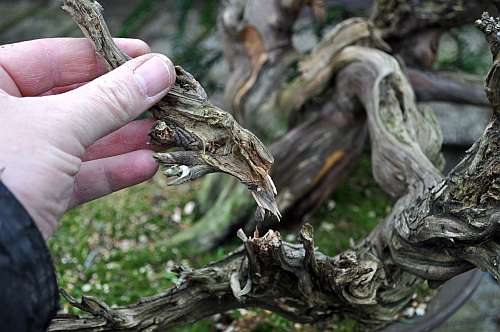
Red arrow points at the Jin that is just removed. The old Jin just above it proved to be almost completely rotten and broke off easily when I checked it with my hand! A little stump that still was hard is left for Tony to decide if he wants to use in the future when this trunk is separated and starts its new life in his garden in the UK…if all goes well that is?!

17-5-2016 Prunus mahaleb 043 hans van meer 500

Here that rotted old Jin is removed up to where the hardwood started! The branch growing to the right side of it is left as an engine for the new roots that hopefully will grow below it! It is again up to Tony what to do with this branch in the future?!

17-5-2016 Prunus mahaleb 046 hans van meer 500

A closer look from the other side. That jin stump could be interesting in the future and that branch that is left can be left and used in a design or be transformed into a Jin as well in the future?!

17-5-2016 Prunus mahaleb 053 hans van meer 500

With the use of a wire, the angle of the air layering is checked from both sides until I was satisfied! Red arrow: Then with the help of a thick black marker two lines were drawn, one next to the wire and the other one about 2 Inches further down the trunk.

17-5-2016 Prunus mahaleb 055 hans van meer 500

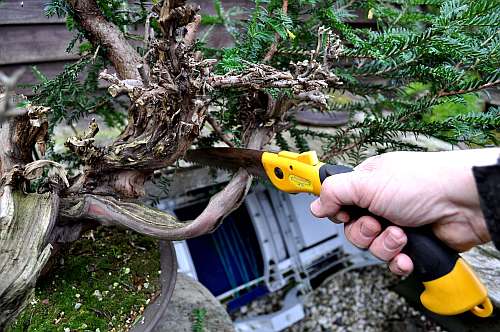
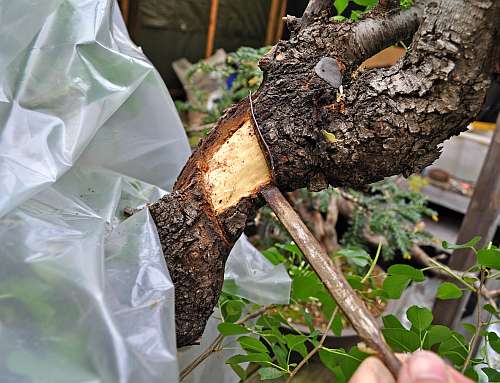
With the help of a small iron saw, I carefully sawed through the bark! using this saw was an experiment because in the past I had struggled to make a clean cut when I used a sharp knife and I was right…it worked like a charm! Straight lines and a clean cut without the chance of cutting off a finger or damaging the bark! Red arrow points at the bottom cut!
17-5-2016 Prunus mahaleb 059 hans van meer 500

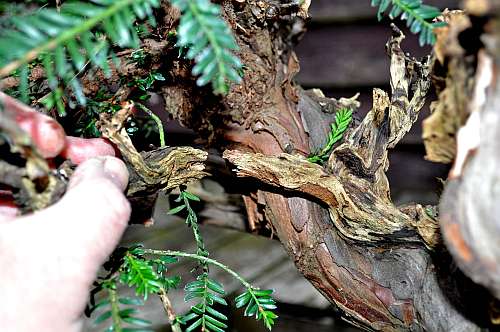
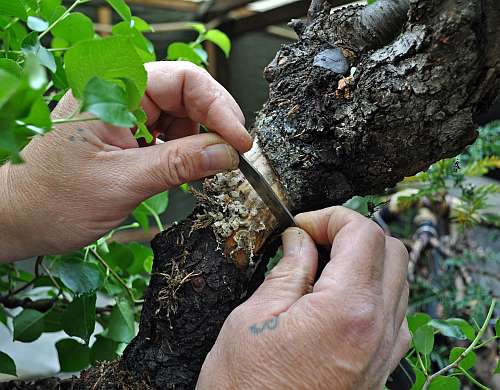
With a just sharpened chisel, the bark was piece by piece carefully removed. At the top of the fresh air layering, you can see where the life section stops and the (brown) deadwood part starts!
17-5-2016 Prunus 008 hans van meer 500

With a sharp and clean knife, the cambium layer is carefully scraped away everywhere along the top incision! Making sure that nothing is left so that there will be no cambium flow possible between the top and bottom incision! This now will trigger the tree to make new roots along that top incision….if all goes well that is?! 😉
17-5-2016 Prunus 011 hans van meer 500

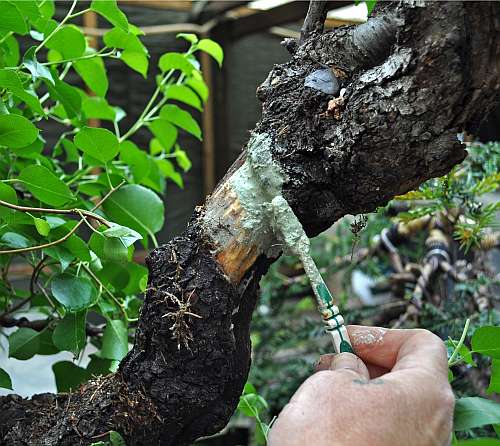
Then a paste of rooting hormone and water was applied to the top cut and below it. This was left to dry so that it would stick to the surface even when the wet sphagnum moss is applied! This rooting hormone powder (from Bayer) will stimulate and help the production of new roots!
17-5-2016 Prunus 020 hans van meer 500

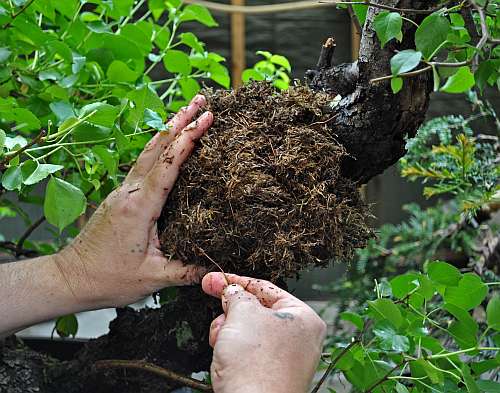
First, a layer of water and rooting hormone-soaked sphagnum moss is applied and held in place by a strain of 1 mm aluminium wire. Then the second layer of in-water-soaked sphagnum is applied on top of the first layer and is also held in place with wire.
17-5-2016 Prunus 024 hans van meer 500

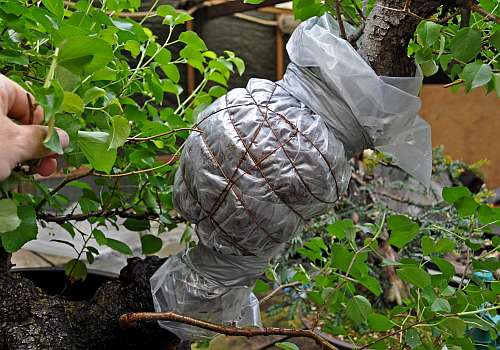
Then the sphagnum is completely covered by a double layer of strong transparent plastic that is tightly held in place with aluminium 1mm wire. Both ends of the plastic are tightly taped shut to make sure that nothing will move. In the future when the sphagnum gets too dry, small holes can and will be made at the top of the plastic ball to be able to insert water to wet the sphagnum!

17-5-2016 Prunus mahaleb 067 hans van meer 500

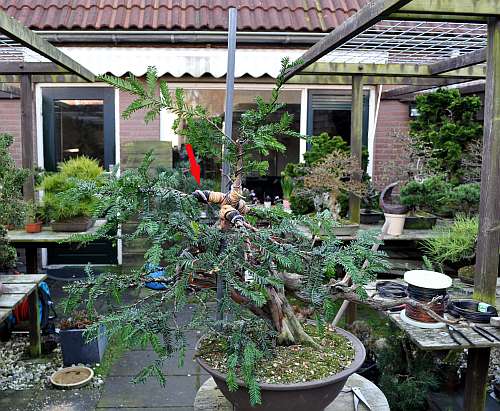
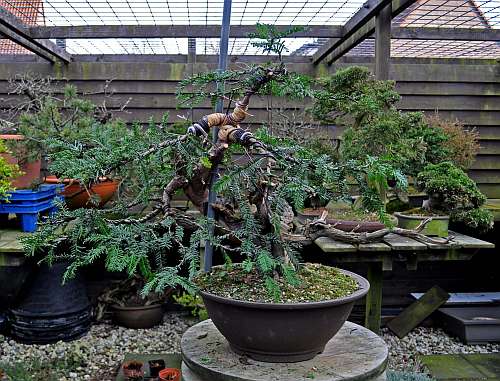
The whole air layering is seen from the front side of this old Prunus. From now on it is fingers crossed and anxious waiting and watching until the first roots appear through the plastic! I forgot to tell you that all the foliage above the air layering is cut back to 2 leaves to minimise the need for water! I will try to keep this heavy monster and its air layering out off too much direct summer sun heat and hope for the best!! 🙂

I will keep you all informed if there is any progress and I hope you enjoyed this little story this far?!

Cheers,

Hans van Meer.

Info: karamottobonsai@hotmail.com
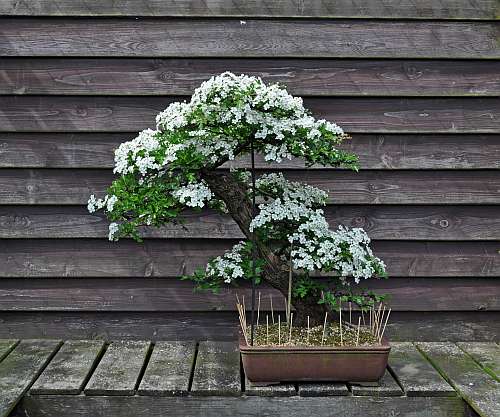

My Dutch Hawthorn Yamadori In Full Bloom.


Note from Me: this is a reply to the reader of my blog who so kindly posted a comment to point out to me that he or she and I quote: “did not know that there was a Dutch Hawthorn species”. Well, there isn’t! The title of this post “My Dutch Hawthorn In Full Bloom” points to the fact that the Bonsai in this post is a Dutch Yamadori of the Hawthorn kind and not that it is a Dutch Hawthorn species! Now I understand that I maybe could have better titled this post: “My Dutch Yamadori Hawthorn In full Bloom” to prevent all the confusion of this comment poster?! But in my defence, I would like to point out that like I did in Bonsai, I thought myself how to speak and write in the English language for the purpose of being able to write about my Bonsai adventures on bonsai forums, my website and blog! And I do realise that these posts are still full of poor spelling and grammar, believe me I know! But hé…I try as best as I can and 120000+ hits today when you google my name+bonsai must show that most people don’t mind me making all these honest mistakes and enjoy reading about what I am doing! And for all those people I will keep on posting and apologise in advance for all the mistakes that I know I will make in the future! 


11-5-2016 Hawthorn 005 hans van meer 500

Hi, everybody, this picture was made a few days ago when the weather was just beautiful sunny and it was 25 degrees! As I write this today, it is only 11 degrees,  raining and storming?!

I was in the middle of preparing this Dutch Hawthorn Yamadori (Crataegus monogyna) that I collected many years ago close to where I live, for the exciting “KEI BONSAI KAI” exhibition that is held on Saturday the 28th of May 2016 from 10h-18h in Danny Use famous Bonsai Centre “Ginkgo” in Laarne Belgium (free entrance)! Those unsightly wooden sate sticks around the rim of the pot are there to keep the rock pigeons that visit my garden regularly for free seed and water from sleeping under need the foliage! Otherwise, they would have destroyed the tender new moss and thrown out my topsoil! This those not harm them at all and now they sleep and rest on a large rock that holds down a cascading Mugo pine…you got to love these little creatures! The larger wooden sticks in there are to hold the top and top branch in place, this way I don’t have to use wire every time and it is just as efficient! The Hawthorn has an amazing amount of flowers this year and I was really looking forward to showing it for the very first time to the public ….. but disaster struck once again! About 35% of all the foliage was infected by some sort of insect and left the leaves covered with bums like they have chicken pocks or measles! I had this before on some of my Hawthorns and it is quite harmless…but it looks like shit! I removed most of the infected leaves, but I soon came to realise that it would leave the tree almost bare in some places and that would be unsightly and is not done in such a high-class exhibition! So I sadly had to decide to not show this one and another infected beautiful small Hawthorn that I was planning to show and has the same problem! It is sad and very disappointing….but these things can happen when dealing with living things that are a part of Bonsai if we like it or not! But the picture is beautiful enough to show you all this rare Dutch Yamadori in the “Mother and child” style with all her flowers!! She tried hard enough to be beautiful for this big show, but a small insect destroyed her chance to shine….maybe in the future, she will get another chance?! I will now bring in only 2 of my Bonsai! They will be shown with scrolls and accents and I will post a picture of the whole event (and maybe film?!) as soon as I get home from these exciting reunions of some of the old Ginkgo gang! After all those years it is great to get home to the place where it more or less all started! I hope that you are all coming to watch this great opportunity to see beautiful bonsai and shop around in Danny’s amazing Bonsai Valhalla!! CU is all there!!

Cheers,

Hans van Meer.

Info: karamottobonsai@hotmail.com
————————————————————————————-

Finally ready to give my old Yamadori Taxus it’s first styling (part II).

Hi, everybody,

here is part II of this Taxus styling story!

24-4-2016 taxus styling 189 hans van meer 500

The first thing I wanted to do before I started to style the tree, is improving major large Jin on the right of the tree! It needs a whoosh flow to the right without too much visual distraction in a different direction! The especially straight angular movement away from the flow are a no-no and needs to be changed or completely removed! The straight upwards going Jin in the middle of this picture creates an almost perfect angle with the movement of long Jin to the right side and is clearly obstructing and shouting for attention when we follow the visual direction of long Jin! So it needs to be shortened considerably, but it needs to look like a force of nature had broken it off!

24-4-2016 taxus styling 191 hans van meer 500

With a little-controlled force, the branch is broken off in just the right place leaving a natural-looking small stump that needs little or no more work to look completely natural!

24-4-2016 taxus styling 196 hans van meer 500

Green arrow points at the stump of the Jin that just is broken off. The red arrow points at an almost straight Jin that distracts the flow and movement of Jin just above and in front of it! So again: it needs to go!

24-4-2016 taxus styling 198 hans van meer 500

Again this Jin is controlled and broken off by hand and again Jin breaks right off at the desired place! In the background, you can already see just how the movement of that long Jin is now more clear and more visible without any straight lines distracting it like before! 

24-4-2016 taxus styling 200 hans van meer 500

Much better all ready! But the red arrow points at a Jin that also grows upward in an angular fashion and obstructs at the tip of this long branch the eye movement, flow and natural tapering of that long Jin!

24-4-2016 taxus styling 204 hans van meer 500

So again it is carefully broken off by hand! Leaving a stump that afterwards needs some more work with hand tools to go along even better with that last part of long Jin! That will be done when the major styling is finished!

24-4-2016 taxus styling 207 hans van meer 500

By now that long Jin looks much better and the eye movement to the right is without any obstructions! it is starting to look like a bolt of lightning! Just like I wanted it to look! It brings visual speed to the tree and that is in my eye very exciting for the future of this tree! the red arrow points at a section on that thicker Jin section that needs improving! It is too long in some parts and there are too many small Jins sticking out from it…like tin fingers! This Jin section is not a part of that long Jin and stands on its one! It goes off in a different and those not obstruct the movement of that long Jin!

24-4-2016 taxus styling 209 hans van meer 500

Like before the Jin that protruded straight into the air is removed by breaking it carefully off with my hand! Making that whole Jin less crowded and more open!

24-4-2016 taxus styling 213 hans van meer 500

As you can see in this shot that Jin is now much more open and less busy! In the future when the branches are brought into their desired position and when that large, now still not worked on Shari aria is created, they might be worked on more and or shortened! But those important decisions can only be made when they can be compared with a more finished tree! 

24-4-2016 taxus styling 217 hans van meer 500

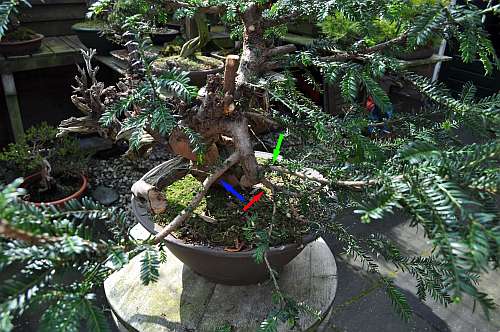
OK! Now it is time to make the final branch selections and then wire them and bring them into their desired position! First the left-hanging branch! The green arrow points at the branch that will form the left front branch. The red arrow will become the more left-orientated branch. The blue arrow points at the branch that will become the left backwards orientated branch!

24-4-2016 taxus styling 229 hans van meer 500

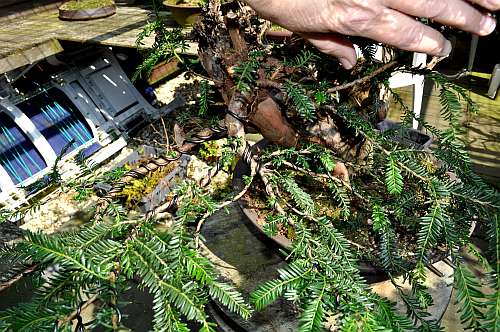
Top view of that left side hanging branch. The left thicker and the one to the right that grows from it are wired in a way that offers the best protection against breaking. Applying the wire like this with room between them covers more of the branch surface than when you apply the wire needle against each other! Although it looks messy, it was precise work to avoid damaging all the buds and young growth! The tinner branches that grow from it on the right lower side are fanned out!  know it doesn’t look like much yet, but remember all branches in this first styling are still way too long (some more than 40 cm) and they will be shortened considerably when the now juvenile growth and buds on them have grown sufficiently! This first styling is not to win any beauty contest, but to bring the basic shape and direction into all the branches so that the skeleton to later work from in more detail is solid!

24-4-2016 taxus styling 238 hans van meer 500

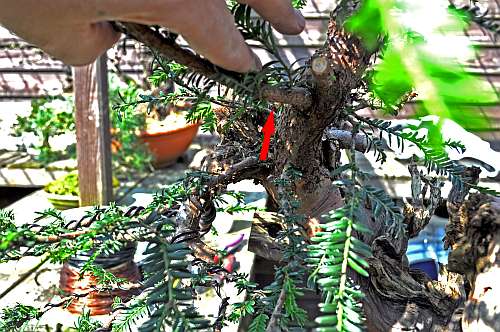
The red arrow points at a branch that is nicely placed but where I am still not sure of if it will be used?! that really all depends on how far the higher placed left side branch will come down?! So I leave it for now! Just above it, you can see a stump from a branch that was the same as the one below it so that could be removed earlier! The two smaller branches below the red arrow are up to now not necessary, but are left just in case! Just see how much new growth is all over them!

24-4-2016 taxus styling 240 hans van meer 500

The red arrow points at that same branch, It is a nicely placed one, but it is a bit too low on the trunk and too close to the bottom left branch! Imagine it bending down to the left…it would cover that first left branch….but still I keep it just in case! Better safe than sorry!

24-4-2016 taxus styling 247 hans van meer 500

Close-up of the top branches that were left after removing two others once earlier. The wounds are covered with cut paste to prevent dieback that could harm the 3 branches that are left! The right one of the 3 is the one that might come down far enough to take the place of the one below it in the picture, the one we have just discussed in the picture before this one! The left one in the picture will become the back branch and the one in the middle will become the top.

24-4-2016 taxus styling 254 hans van meer 500

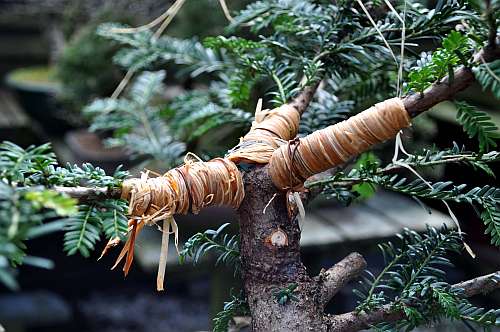
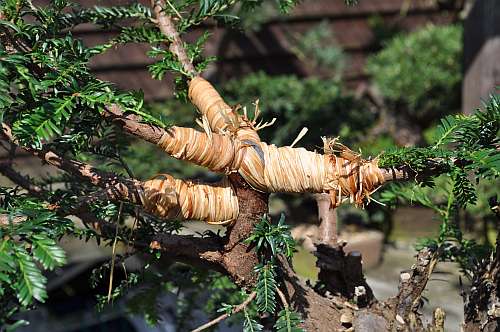
A layer of in-water-soaked raffia is tightly applied and held in place with little pieces of aluminium wire, this is handy when you are working alone! When this raffia dries it will shrink and protect the branches even more from breaking or cracking!

24-4-2016 taxus styling 258 hans van meer 500

On the left, the branch below the future top is also covered with a layer of raffia. It is always handy to have enough water-soaked raffia prepared and ready so that you can work on it without having to stop in the middle because you have run out!

24-4-2016 taxus styling 259 hans van meer 500

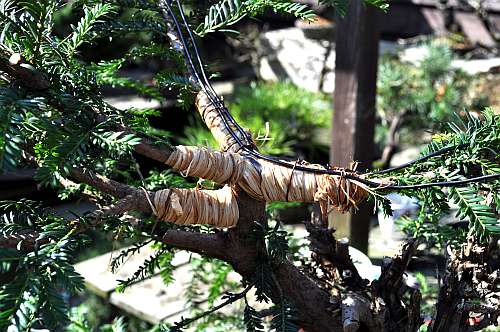
Then two wires are placed on top of the raffia that is also held in place with pieces of wire. This wire needs to be placed tightly onto the raffia without any space under need them! These two branches will be bent down so the wire on top will offer protection from breaking where the most stress is occurring! You might have knottiest that the wires are too long and will stick out from under the raffia?! Well, this is on purpose…they are used to wire the rest of the branch!  Clever or what!? 🙂

24-4-2016 taxus styling 263 hans van meer 500

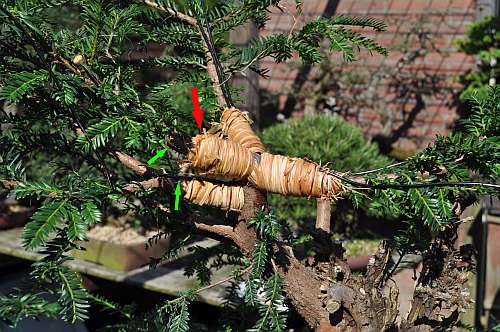
The treetop branches have the second layer of raffia applied to them, to hold the wirer under need it as tight as possible! The red arrow points at the future top branch that will be severely bent up-wards so it needs protection from a wirer under it to protect it! That’s why a U-shaped wire is placed (green arrows) under need that branch, to protect it and the branch below it, which will bend downwards! That branch that goes downwards is here still waiting for its second layer of raffia to hold that U-shaped piece of wire tightly into place!

24-4-2016 taxus styling 268 hans van meer 500

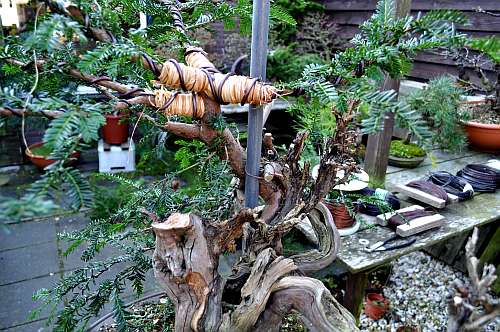
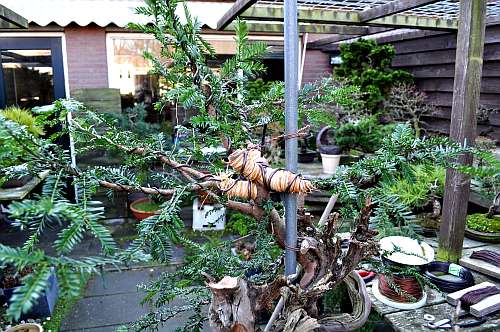
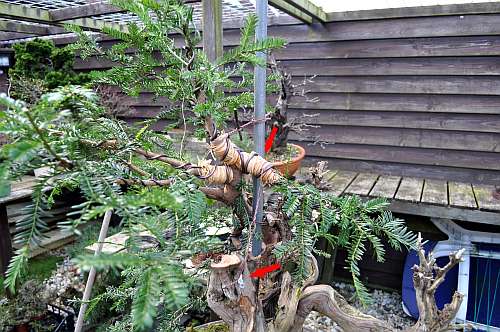
After that last layer of raffia is applied, and just one single MM aluminium wire is used to cover it! I figured that this is enough to safely bend the branches because strong copper wires will be used to hold them firmly into place! A (too long) iron pipe is inserted into the ground and secured firmly (with pieces of rubber between it) against the trunk with strong copper wire. This iron pipe will be used to bring the future top (on the left) upwards.

24-4-2016 taxus styling 272 hans van meer 500

Here the future top is already on its way upward towards the iron pipe! This is carefully done in stages…there is no rush when doing these major bends! Especially when working alone, you are short off 2 hands! It takes some force and technique to bend and turn and tighten the wire with a nipper!

24-4-2016 taxus styling 276 hans van meer 500

The top red arrow points at the future back branch that is brought down and to the left (in this picture) and is held down by a 3 MM copper wire that is attached to two screws that are brought into the Shari (bottom red arrow)! Just look how far it has already come down!

24-4-2016 taxus styling 279 hans van meer 350

Close-up of the wire that is connected to the screws that hold everything into place.

That is, with intervals, more and more tightened with the help of a short piece of thick wire (like you can see on the right off the top)!

In this way, the branch is slowly and as safe as possible brought into the desired position and at the end hold in its place!

In this shot, you can also see just why in the future the large Jin on the left, where the screws are inserted, needs to be largely removed and then naturally formed! It gives the tree a reverse taper (smaller at the base and wider at the top)! It also hides the view of large Jin at the back!

24-4-2016 taxus styling 282 hans van meer 500

The red arrow points at the top that is finally into place, just look how far it is bent upwards…amazing! the green arrow point at the top left branch that is about to be carefully bent down into its desired position! Things are so far coming along nicely! I am completely in my element again…I missed that feeling for so long! 🙂

24-4-2016 taxus styling 287 hans van meer 350

The green arrow points at the new top. The red arrow points at the back branch. The yellow arrow point at the new right hanging branch after it is in stages brought down into its new position! The green arrow points at the top that is even brought more toward the iron pipe!

24-4-2016 taxus styling 289 hans van meer 500

The yellow arrow point at the top is by now in its desired position, but is here still straight and therefore needs bending to create a more natural movement. The red arrow points at the back branch. the blue arrow points at the new first right side branch that also needs additional bending to create curves and the green arrow points at the left first branch that needs some more downwards bending!

24-4-2016 taxus styling 291 hans van meer 500

The red arrow points at the first left-side branch that still needs to be brought down a considerable bit! This is done by carefully pushing it down with my left hand, while the right hand tightens the heavy copper wire! You have to be very handy when you work alone! 🙂

24-4-2016 taxus styling 294 hans van meer 500

The red arrow points at that same left-hand first branch. Just look how far it has come down when you compare it with the picture above! It still amazes me how far you can safely bend stiff branches when you protect them with raffia and wire!

24-4-2016 taxus styling 298 hans van meer 500

Red arrow points at the branch that is just brought down and held in its new position with the help of 2 strong copper wires! Pieces of aquarium tubs and pieces of pot screens are used to prevent the wires from cutting into the bark of the branches! This is very important and must always be done!!!

24-4-2016 taxus styling 301 hans van meer 500

Red arrow points at the branch that was kept on with a question mark?! It could be a left branch, but it would hide the branch below it! And now the branch above it, which has just been brought down, has taken over the place of that branch in a better way…so it can be removed as well !!

24-4-2016 taxus styling 312 hans van meer 500

And this is, for now, the final resold after a day of work! Remember that all the branches are left way too long on purpose to protect the inner buds and small growth! This extra length with all its lush growth will work as a sucking engines to maintain the sap flow and growing power and will only be shortened as soon as I am completely sure that there is enough growth on them closer to the trunk to maintain the branches! The long top will also be shortened in the future and one of its lower-placed small branches will become the new leader and top! But again: only when there is more growth lower to maintain its health! I don’t want to lose any branches, they are all needed and health and growth are much more important now than the wild image of this very old tree!

5-5-2016 taxus 028 hans van meer 500

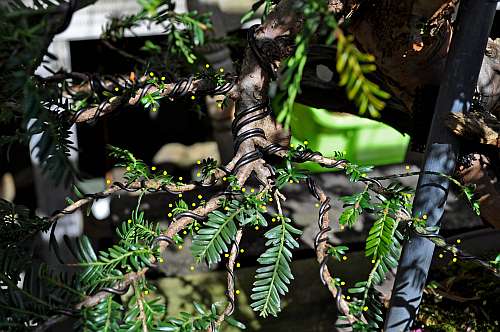
I made this picture on 5-5-2016 just to show and prove to you what I mend by tons of buds and new growth all over the insides of all the selected branches!  This is a close-up of the first hanging branch on the left of the tree! I placed yellow dots next to each bud and new growth to make it more clear for you all to see! When this new growth has grown sufficiently on all the now still way too long branches, they will be all shortened considerably! Some by more than 35 cm!

I hope you enjoyed this story as much as I did making it?! I will keep you all updated on the progress of this future Bonsai and hope you come back for my other Bonsai stories and adventures?!

Cheers,

Hans van Meer

Info: karamottobonsai@hotmail.com

—————————————————————-

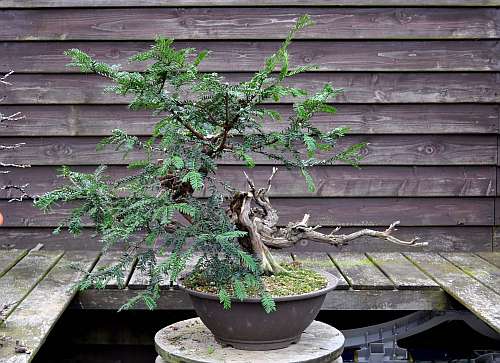
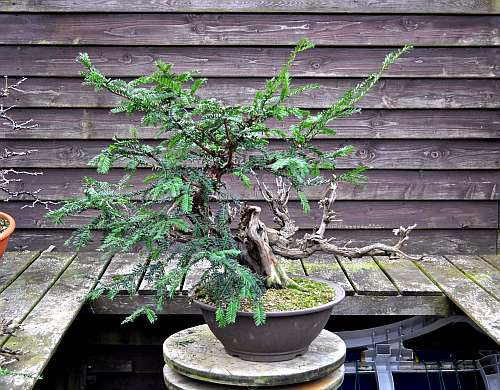
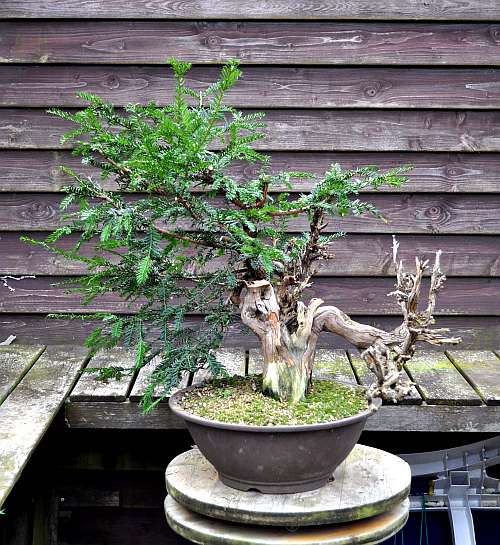
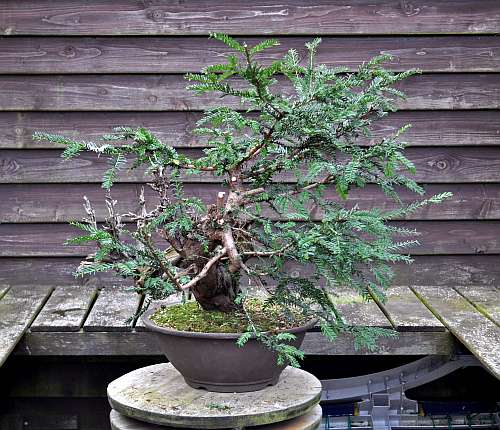
Finally ready to give my old Yamadori Taxus it’s first styling! (part I)

Hi, everybody,

I would like to share the story in pictures and words of the first styling of my old Taxus Yamadori! It was ready for it’s first styling at least 2 years ago….but because of my poor state of mind during that time, I did not dare it somehow!? I just could not make up my mind those days and my natural ability to see a Bonsai in even a piece of straight wood seemed to be completely gone! So the tree grew and grew and without really realising it, it got better and better! Mind you, this was never an easy tree to design! There was so much going on in this ancient tree and so many thing and possibility are to consider and the longer I waited, the harder it seemed to get to find the tree among all those branches, foliage and amazing but difficult deadwood?! But about a month ago my shutters were finally opened and more of the old me came back…and one of the first things I did was creating a workspace in the open air and pick up this Taxus and without any plans, I started to work like I use to do in the old days! And this is the story of that amazing afternoon in my garden and the birth of a future Bonsai! Hope you enjoy it as much as I did?!

31-3-2012 verpoten Taxus 005 Hans van Meer 500

Here are some old pictures from 31-3-2012 when the Taxus was repotted into its present pot. It had grown an amazing amount of healthy fine roots and I had no problems repotting it!

31-3-2012 verpoten Taxus 043 Hans van Meer 500

Here it is already planted in its new home. I used a mixture of Akadama, Kiryu and Bims. This is what I use with success for all my Taxus and other evergreens! When I was sure that all possible air pockets were filled with soil, I watered until the water that came out from the holes in the pot was clear! 

31-3-2012 verpoten Taxus 048 Hans van Meer 500

Here it is in its new home just before watering it. Just look at that amazing and unique deadwood that was created when the poor tree was almost cut in half by a large boulder that still covered most of the tree when I found it all those years ago! That covered section amazingly stayed alive for many decades, before it finally died back to leave all this natural deadwood! No matter what, I wanted this artwork from mother nature somehow in my future design…but it would not be easy! In this picture, the branches on the left were not bigger than my pinky and one of them was brought into place to the right to later form the trunk and top out of! And one branch on the bottom left was bent behind the trunk too, in years, end up as a branch just above the long jin on the right side! My plan then was to somehow create a windswept tree! In the following pictures from a few weeks ago, you will see just how fast a healthy yew can grow!!!

24-4-2016 taxus styling 082 hans van meer 500

The present front side of the tree. How amazing is that?! It has grown into a bush! Some of those branches were almost a meter long and the former pinky-thick trunk/top branch is now almost as thick as my wrist! That new trunk needed over the past years a lot of force and heavy copper wire to be bought and held into its desired position!

24-4-2016 taxus styling 087 hans van meer 500

The right side of the tree with a view over the long jin. Just how amazing are all that beautiful deadwood and all those healthy branches to choose from! I can’t wait to go in there to find out!!!

24-4-2016 taxus styling 090 hans van meer 500

Backside view of the tree. The red arrow points at the back branch that I had let grow from the (here right) front side to end up as a branch over that long jin (here on the left of the red arrow)! That branch had grown at least 50 cm in the last 4 years!

24-4-2016 taxus styling 091 hans van meer 500

Close up from behind the tree of that same long branch (red arrow). The right red arrow points to where this branch originates from at the front left side! By now I already had my doubts about this branch?! It those not looks naturally and it those not fulfil the purpose I had in mind when I came up with that idea! By now I realise that it would always look man-made and strange…so!!!

24-4-2016 taxus styling 106 hans van meer 500

Front view. Red arrow: this is the point on the left front side where that same branch grows from, you can just see it disappearing behind the trunk. It’s just those do not look right…right?! The small branches that grow toward us from just below that red arrow look just fine to create the first hanging branch out off!

24-4-2016 taxus styling 109 hans van meer 500

Red arrow: here that branch is already cut off, leaving a stump to allow die/dry back so that those promising small branches won’t die! Better safe than sorry!

24-4-2016 taxus styling 111 hans van meer 500

Front side view. The red arrow points at the point where the cut-off branch used to be, just above that long Jin. Now there is a more natural open space and a clear view of that unique long Jin!

24-4-2016 taxus styling 115 hans van meer 500

Red arrow: these branches that grow on the left middle side of the trunk just above the branch that I just cut off, are too straight and grow directly upwards and therefore impossible to bend in a believable way! And they were not needed, there were other branches to fill that gap! So off with their heads!!!

24-4-2016 taxus styling 117 hans van meer 500

Backside view: The branch I am holding is a useful left or front branch. The left red arrow point at a stump left from the middle right side branch that was already cut off because the right side branch where the right side red arrow is pointing at was better placed on the trunk to fulfil that same purpose! The middle red arrow points at a Jin that is in the way of just that branch and feels very weak …so!!!

24-4-2016 taxus styling 120 hans van meer 500

Red arrow: Here that Jin is already broken off by hand. As you can see it was just hanging on by a small piece and would probably have been broken in the future anyway!

24-4-2016 taxus styling 125 hans van meer 500

Front side views again. White arrow points at the future top left branch. Green arrow points at the future top branch. The yellow arrow is pointing at the first right-hand branch. The red arrow points at an in-the-way front branch stump that was removed. Blue arrow points at a better-placed front branch. And the purple arrows point at the long Jin section that is beautiful but in the way of the branches that need to fill that space!

24-4-2016 taxus styling 127 hans van meer 350

Purple arrow points at the place where Jin will be cut off with a saw! Leaving enough off it to bring in some strong screws to support the thick copper wire that will be needed to hold down the branches in their place when they are bent down with great force! I know that this is a great-looking Jin, but removing it is necessary so that the branches can be brought into their desired position! It will also open up the view to the rest of the dead wood in the back and the branches that otherwise will be hidden! And open space is very important in my Bonsai designs so .. some time you have to break the egg to make an omelette!

24-4-2016 taxus styling 131 hans van meer 500

So thick Jin is sawed off with a hand saw. That took some force because Taxus wood is very strong and this piece was very old. Big decisions, but necessary for my design!

24-4-2016 taxus styling 136 hans van meer 500

Cut off after hard work. Amazing that just a few weeks ago I could not make any decisions or had any ideas or even interest in this work…now I  am very happy that this period is behind me…I missed this so much and it was so far out of reach at one point! I’m a happy man!

24-4-2016 taxus styling 137 hans van meer 350

The cutoff Jin. It was necessary to be removed, but now I find it hard to throw it away!!! Yews make such beautiful deadwood and this piece is so stunning! I will keep it at least for a while to hold it every now and then and use it as a model for my deadwood work or students! I must be getting a bit sentimental at my old age !!! But seriously it those not becomes any easier to decide to remove something old that mother nature has created so wonderfully!

24-4-2016 taxus styling 139 hans van meer 500


Backside view again. The red arrow points at the just cut-off stump. The green arrow points at a nice branch with a large Shari running over the full length of it. Blue arrow point to the spar’s little tin branches that grow only on the tip of this old branch! Although it is a great unique branch, it can not be used in any way in the design and would even look silly seen from the front! It would always be a long bare branch with some foliage on the tip of it! And bending it is also not an option…believe me, I thought long and hard if there was a way to use it, but there wasn’t! So then you have to make a decision and I did!

24-4-2016 taxus styling 140 hans van meer 500

Left red arrow: Here you can see from the front how awkward this branch is placed and how strange it looks, it dwarfs the trunk!  The top arrow point at the only small branches that grow on the tip of it!

24-4-2016 taxus styling 143 hans van meer 500

Here the branch is sawed off. I leave a long piece that might be shaped into a Jin, I can always remove it more or completely in the future if necessary!

24-4-2016 taxus styling 149 hans van meer 500

The sawed-off section. As you can see: it only had a few tin branches growing on the thick tip…but still it wasn’t an easily made decision! Creating a Bonsai often means that you have to make big decisions! If you don’t do that it will bite you in a few years’ time and life is too short to do that!

24-4-2016 taxus styling 150 hans van meer 500

Red arrow points at a branch that grows directly opposite to the other one! The other one is important to the design, so this one loses and needs to be cut off!

24-4-2016 taxus styling 159 hans van meer 500

This Jin is half-rotted and loose! It is broken off by hand, and this leaves a natural look as if it was always so! this tree has beautifully deadwood everywhere…I am so lucky with this material!!!

24-4-2016 taxus styling 162 hans van meer 500

The front side of the tree. Most branch selection is now done and I shift my focus for a while to the deadwood sections! There are a lot of distractions in the flow of that long jin that need to be dealt with!

24-4-2016 taxus styling 165 hans van meer 500

The right side of the tree, looking over that long Jin. Here you can clearly see just how many branches and foliage are removed from the tree! But still, there are one or two branches that might have to go when I am bringing it all into the desired positions!?

24-4-2016 taxus styling 167 hans van meer 500

The back side of the tree. Now that all obscuring stuff and branches are more or less removed, all become much clearer! It now is so much more obvious where I am going with my plans!

24-4-2016 taxus styling 172 hans van meer 500

The left side of the tree. In this shot, the branch structure is very clear and even the open spaces are nicely visible from this angle! The branches are way to long now, but they will be shortened in the future when there is enough foliage to work closer to the trunk on those branches. For now, there is more than enough foliage removed to keep it safe…the tree’s health is important now!

24-4-2016 taxus styling 175 hans van meer 500

Wow just look how much branches and foliage are removed…must be more than 75 %! Now light and air can reach the hundreds of tiny buds and small branches that are on branches that remain on the tree! I am sure she will do just fine and will recover quickly! Next is the styling of this great tree…but that is for part II! I hope you enjoyed it so far and join me in the next edition?!

CU soon!

Hans van Meer.

Info: karamottobonsai@hotmail.com
——————————————————————————-

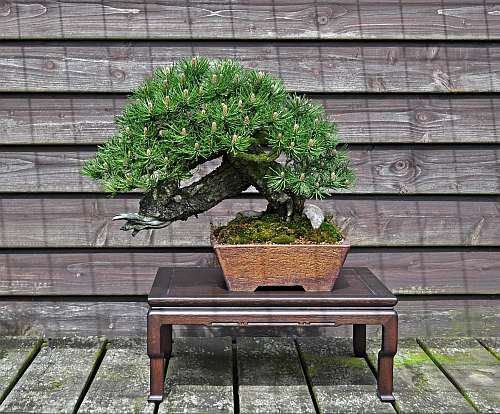
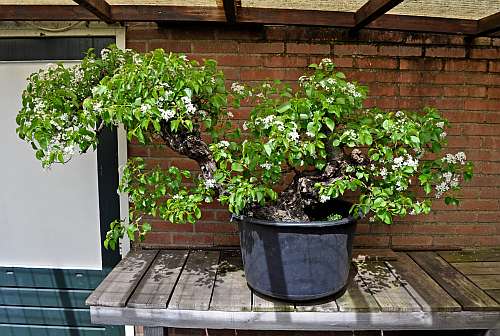
Pictures of Wolfie the Mugo pine and a giant Prunus mahaleb in full bloom.

Hi, everybody,

I would like to show you some new pictures of Wolfie the Mugo pine and the other one of my Prunus mahaleb Yamadori.

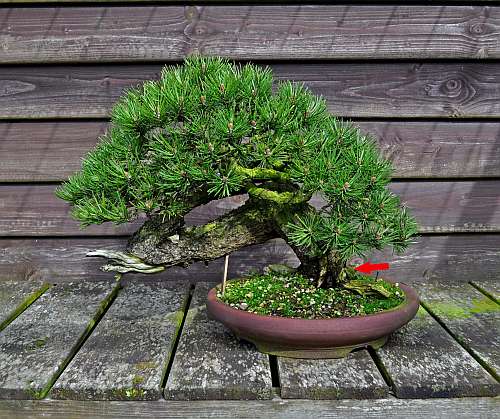
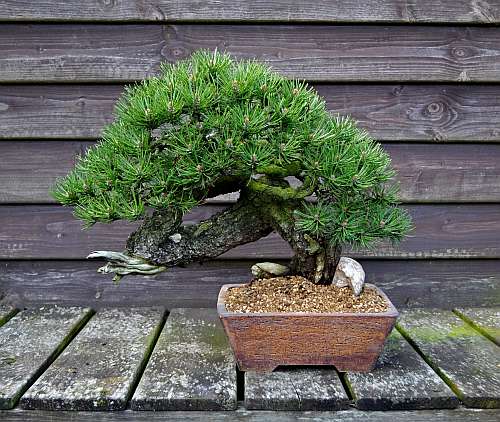
I just made this picture of Wolfie, it was the first real dry day with some weak sun every now and then! The last week was colder than it was last Christmas! We even had snow! Wolfie’s buds are swelling nonetheless and he looks like he suffered no ill effects from the repotting that I did earlier! I planted some moss around him and that looks immediately a lot better! I am glad that I found a solution for the rotted root, it would be such a shame if Wolfie could not be shown after all the work it was to get it this far! I hope you like how it looks?!

29-4-2016 Wolfie+Prunus 024 hans van meer 500

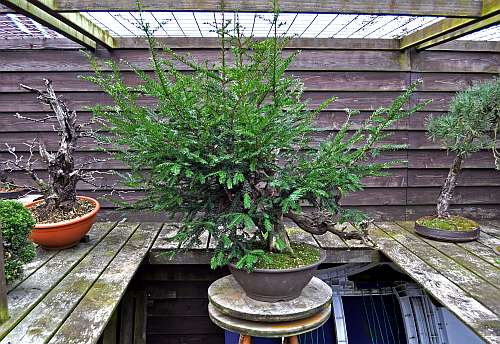
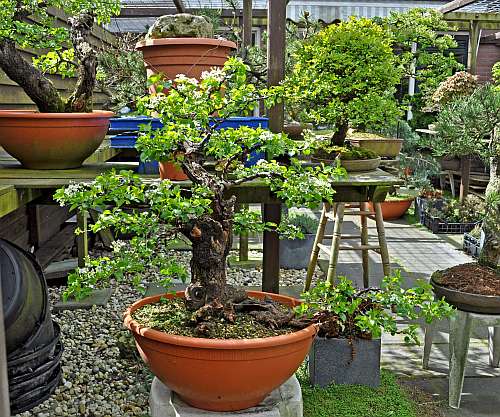
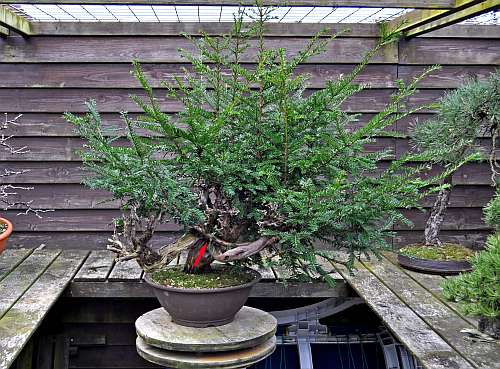
This giant Prunus mahaleb is another one that my dear fare away friends and I collected in 2012. It is doing amazing like the other 3 and it has a lot of sweet-smelling flowers! This massive tree has an enormous root base and is top to bottom covered with beautiful old dead wood! All of the branches that I need for my design are new and are coming along nicely! They have been rewired last Fall.

29-4-2016 Wolfie+Prunus 024 hans van meer virtual 500

I made this virtual to show you the twist that I have planned for later next month! The red part will be the (mine) future tree! It has a killer base, natural jin, beautiful movement and stunning deadwood from top to bottom! And here comes the surprise…the yellow part will be separated by air layering it, only leaving the red stomp that will be turned into a jin that will match all the deadwood! This yellow section that is also covered with amazing deadwood and movement is already promised to my dear friend Tony Tickle, who can’t wait to get this beautiful future mahaleb Bonsai! I hope the air layering will work so that one tree can become two trees?! I will keep you posted when I have done the air layering and the separation…fingers are crossed that it will work?! I hope you like this post and see you hopefully at the next one?!

Cheers,

Hans van Meer.

Info: karamottobonsai@hotmail.com
———————————————————————–

Wirring my two Prunus mahaleb yamadori.

Hi, everybody,

here are some pictures of the rewiring and styling sessions I did on my two Prunus mahaleb yamadori that were collected in 2012.

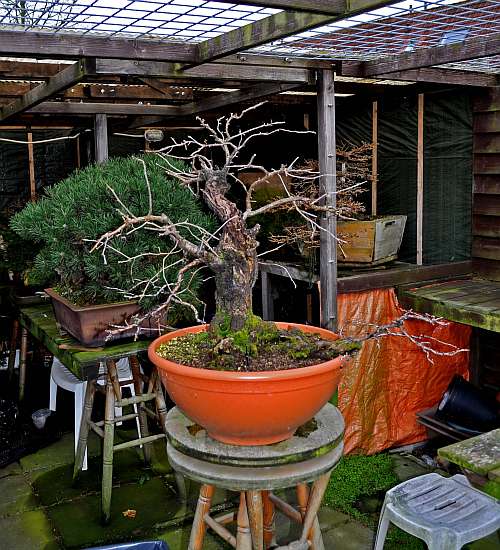
Below: Both old Prunus mahaleb had grown amazingly during the past season and the wire had to be taken off before it would dig into the bark! But the branches did have enough time to grow more or less into their desired position and stay there!  Now it was time to loosely rewire all branches again and to reposition them where necessary!

24-4-2016 Prunus mahaleb 020 hans van meer 500

Below: Just look at all the former suckers that last season was bent down into the ground to create new roots! This is a very easy but important technique to use on these species that create tons of these suckers during the whole growing season! The ones that form every were along the trunk need to be removed immediately when they are not useful in your design, otherwise, they will leave ugly scars!

24-4-2016 Prunus mahaleb 012 hans van meer 500

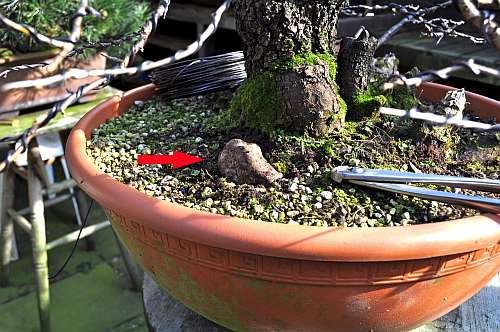
Below: Remember that I told you earlier in the repotting story of Wolfie about the lucky stone that I had found by chance in the soil of one of my Prunus mahaleb? Well, it was in this tree when I was removing unwanted mosses and weeds from the soil surface to expose the roots to light and air so they would thicken more quickly!

24-4-2016 Prunus mahaleb 021 hans van meer 500

Below: The red arrow shows a branch that grows straight and ugly directly upwards and although I wired it before, it still needs to be removed completely because bending it won’t make it look any better! This branch is much too prominent in your face and it is impossible to make sharp bends in a branch like this and I don’t want it to look like an arch!

24-4-2016 Prunus mahaleb 026 hans van meer 400

Below: Here the branch is completely removed and now the lines and the flow of the branch are much more natural and pleasant! The eye of the observer can now follow the flow of the branch unobstructed right to the tip of it! Lines and even more open spaces are very important in Bonsai! Even in the more natural-designed Bonsai like these two! I believe that branch structure is of the utmost importance in Bonsai design even in the more natural-looking ones! Creating a bushy tree to save time and then calling it a Bonsai is wrong! Proper branch building is an intricate part of Bonsai art and should not be neglected to get a quick result or to fool the public! At least that is my opinion!

24-4-2016 Prunus mahaleb 030 hans van meer 500

Below: Here most of the branches are wired and bent and fixated into their desired position. On the right side, two main branches still look a bit stiff in this picture and most likely will be bent some more next season with the help of raffia! The red arrow point at a to strait looking branch that grows from the old hanging branch that over the decades had rooted into the ground! This gnarly-looking branch full of stunning deadwood plays an important part in my overall design and a straight line that the new branch that grows from it is very unwanted and looks unnatural and ugly…so it needs bending with the help of raffia to protect it from breaking!

24-4-2016 Prunus mahaleb 038 hans van meer 500

Below: Here the branch is wrapped with one layer of water-soaked raffia, this will protect it from breaking or cracking! Soaking raffia for a while in the water is important when the water evaporates the raffia will shrink a little and embrace the branch even tighter, therefore working better!

24-4-2016 Prunus mahaleb 372 hans van meer 500

Below: Just one on an old removed branch stump secured layer of 3,5 mm wire is applied and the branch is carefully bent into its new more natural-looking position! Some light moving up and down was also created to make the branch look less stiff!

24-4-2016 Prunus mahaleb 377 hans van meer 500

Below: Top view from that same branch. To hold the branch into its new place a  strong copper wire is secured to one of the many ground Jin that stick out off the ground in front of the tree. The branch looks more pleasant now and because it is now automatically brought closer to the tree, it has become more of a part of the overall appearance! So a win-win situation!

24-4-2016 Wolfie 385 hans van meer 500

Below: All work done! I know it is not a very good picture and things are a bit hard to see…but this tree is very heavy and I can’t lift much these days! But I hope you can still make out the overall impression of this very promising tree?! The stumps sticking out off the ground in front of the tree are mostly natural Jins, left from old branches! They will stay to play a big part in this old tree’s natural design!

24-4-2016 Prunus mahaleb 386 hans van meer 500

Below: Here the old tree is in full bloom! The very late hail storms we had the last couple of days have sadly removed most of them! I am very happy with the progress of this tree…only finding a pot will be a crime! I think I will have to let one be specially made for me in the future! I am afraid a normal-shaped pot will not fit it?! But that’s for later!

24-4-2016 Prunus mahaleb 399 hans van meer 500

Below: Here you see the second Prunus mahaleb that is already wired here and the branches are brought back into their desired position. This old tree was like the other one burned by forest fires and the amazing old deadwood is all scorched, this created beautiful black and grey tones all over the incredible deadwood that man cant copy! The top and top branches are hugging the amazing deadwood section from behind to emphasise it!

24-4-2016 Punus mahaleb 014 hans van meer 500

Below: Here you can see the, for now, finished tree.  The thick jin in the bottom middle still needs some work in the future to make it more elegant and a lot of the by-now dead bark below it needs to be removed as well. I am not yet sure what to do with the ground Jins that stick out off the ground in front of the tree..but they can always be removed later when I am sure! On this Prunus, there were also created new roots from suckers, but not as much as on the other one.

Prunus mahaleb 016 hans van meer 450

Bellow: The old Prunus in bloom! It needs to be more tilted to the left like in the picture above, but this picture is all I have! I like this twin trunk design, it looks natural and honours how this old fighter looked when we found it! With some more years to create finner ramifications, it will look amazing and unique and I can’t wait to find a fitting pot for it and show it to the world! I am so immensely grateful to my dear friends who allowed and helped me to collect these stunning works of nature! They brought joy into my live and I have these beauties in my garden to remind me every day of how wonderful live, nature, friends and doing Bonsai can be….thanks guys!!!

26-4-2016 prunus mahaleb 011 hans van meer 500

I hope you enjoyed this story of my two Prunus mahaleb, it took forever to write, but I found a very long way to at least get it right for you all to read! I am glad that I am able to do my hobby again with joy and a head full of ideas and I am glad that I can again share it with you all! There is more to come, so watch this space!!!

Cheers,

Hans van Meer.

Info: karamottobonsai@hotmail.com

…………………………………………………………………………………………………………..

Repotting and saving Wolfie the Mugo pine.

Hi, everybody,

here are the pictures from the repotting of Wolfie the Mugo pine.

24-4-2016 Wolfie 313 hans van meer 500

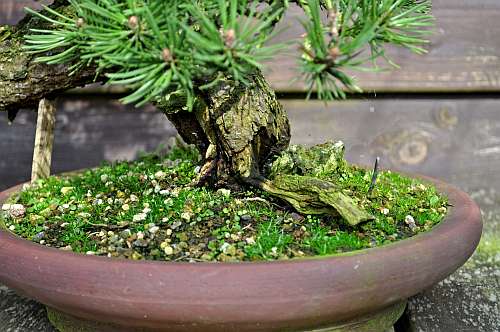
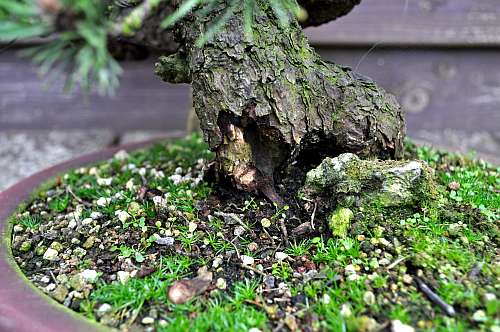
About a year ago I noticed that Wolfie was slowly falling over to the left! On closer inspection of what was causing this, I discovered that the thick root on the right side of the trunk (red arrow) was completely rotten and could not hold the pulling weight of the tree any longer. Wolfie was supported with a piece of wood to prevent it from falling over and to save the roots that were still trying to hold it in place!

24-4-2016 Wolfie 326 hans van meer 500

Close up from the right side of the rotted root and trunk from which the dead bark was removed. No wonder Wolfie was slowly tipping over to the left! There was not much left to hold him upright at all!

24-4-2016 Wolfie 338 hans van meer 500

Close-up of the rotted area from further to the right side. Notice the natural rock on the right side of the dead root that is embedded in the trunk and in the soil.

24-4-2016 Wolfie 345 hans van meer 500

With a concave cutter, the rotted root was cut off. If you look at the space above the embedded rock you can see just how much Wolfie has fallen over! That rock used to fit tightly in the truck above it!

24-4-2016 Wolfie 349 hans van meer 500

Here you can see that the dead root is cut off. Now all the rotted wood needs to be carefully removed and treated to prevent further rotting in the future, making sure that the stone I found still fits the wound!

24-4-2016 Wolfie 359 hans van meer 500

The red arrows show a stone that I by luck found in the soil of my Prunus mahaleb yamadori from Slovenia when I was wiring it this spring. I immediately knew it would fit in the wound that would be created when I removed the rotted root from Wolfie!


24-4-2016 Prunus mahaleb 021 hans van meer 500

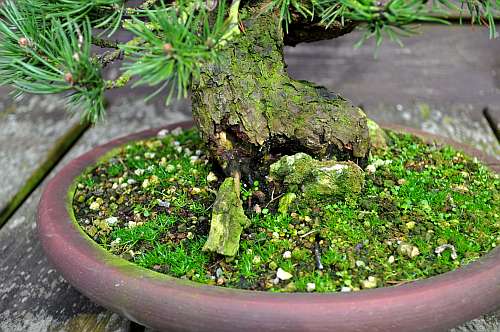
Man, I could not believe my luck, it fits like a clove! It looks like Wolfie has grown against this rock his whole life! And it makes the base of the truck look so much wider! Big problem solved! What are the chances of finding this rock in a pot of another yamadori that I found years later in another part of the world…AMAZING!

24-4-2016 Wolfie 353 hans van meer 500

Here is Wolfie in its new pot after a difficult repotting! securing it to the pot needed some thinking and trickery! A screw was placed out of the side between the new rock and the old original small rock on the right of it from which a thick wire was secured through the hole of the pot! This wire was tightened until Wolfie was in the right position and prevents Wolfie from falling over to the left again!

24-4-2016 Wolfie 366 hans van meer 500

I hope you forgive me that this post is a bit messy but I have a lot of trouble posting these days…but I still wanted to share my work with you all after all this time! I will post a picture of Wolfie after it’s been in his new pot for a while!

More posts will follow soon…if everything keeps on working?! I think I need a new computer?!

Cheers,

Hans van Meer.

Info: karamottobonsai@hotmail.com

———————————————————————

Sunny Hawthorn Foto Shoot.

Hi, everybody,

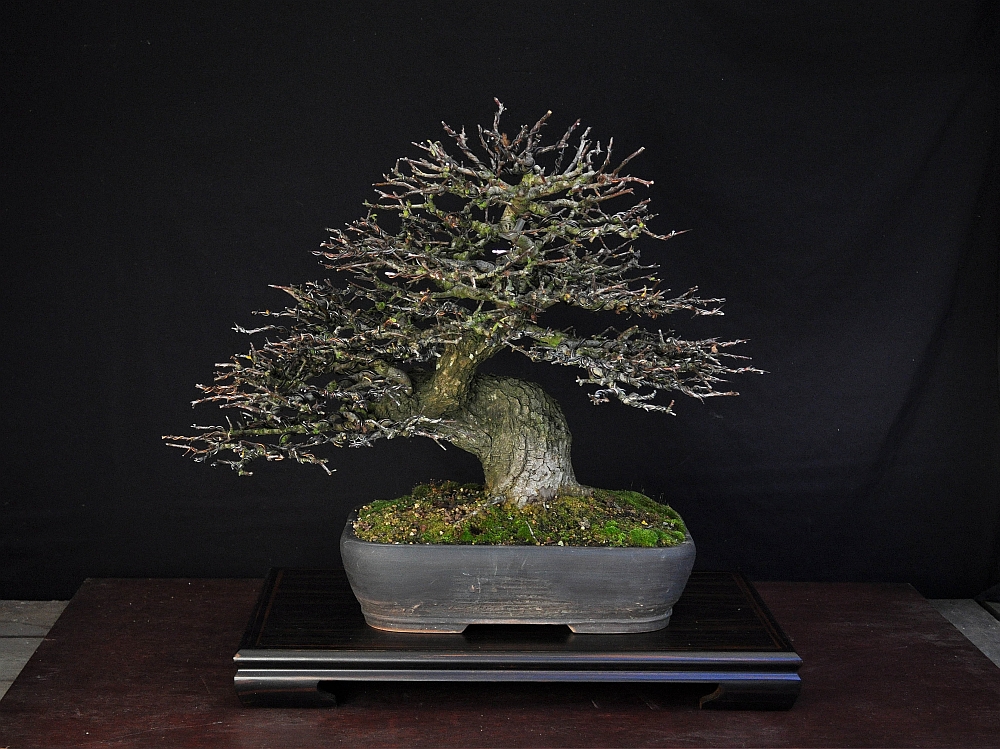
yesterday turned out to be just the amazing clear sunny day that I had been hoping for, so I was able to take some pictures of my small Hawthorn. Without sunlight, I am not able to use the technique I prefer to use to make pictures of my trees! Let me explain: I make this kind of picture in the back corner of my small garden (the only real place I have) at the end of the day the low-hanging sun just reaches far enough to provide the proper lighting. The subject is placed in front of a large black cloth with the (by me) filtered sun (semi-transparent plastic sheet) coming from the right side. The subject stands basically in the semi-shade and is only been made visible through reflected sunlight. This sunlight is reflected from carefully placed plates of hardboard (the ones with the white side on it), this makes the subject light up and stands out from the dark background! I make this picture standing under need an umbrella, Ella Ella (sorry!) to prevent the sunlight from shining into my camera lens! I shot 224 pictures in total and only 2 were good enough to be later worked on (light, sharpness and contrast) and only one finally made it to be shown here! This little Hawthorn is here still in its old pot and will pretty soon be repotted into its new custom-made John Pitt pot!! For the rest of the day… a lot of cleaning up old foliage and preparing my babies for mister winter!!!

26-10-2015 Meidoorn 018 hans van meer org 400

26-10-2015 Meidoorn 194 hans van meer org web 1000

                                                   I hope you like the picture?!

Cheers,

Hans van Meer.

Info: karamottobonsai@hotmail.com

————————————————————————————————-

A picture of my small Hawthorn.

Hi, everybody,

here are 2 pictures of my small Hawthorn that I am about to enter into the preselection for the next Noelanders 2015 trophy. The first picture is from Feb. 2008 when work started with a bare skeleton and the second one is now, still in its old training pot that will be changed with its new custom-made pot by John Pitt when the tree is dormant….so that it hopefully look great at the show…..if it makes it in that is!? 😉 It sadly is just too high to be placed into the Kifu-sized Bonsai section, which has special attention in this year’s edition, but I am glad it would be in the show anyway! I think this little tree has come far in such a little time! I hope you like it like this? I will post a picture as soon as the foliage has dropped off, to show its branch structure!

Cheers,

Hans van Meer.

februari-2008-352-hans-van-meer 2 8-10-2015 meidoorn 056 hans van meer org web

Info: karamottobonsai@hotmail.com


My two Hawthorns In Full Bloom.

Hi, everybody,

I would like to share with you all some pictures that I made of 2 off my Hawthorn Bonsai in full bloom. I hope you like them as much as we do?!


                                                Pot: top one: Dan Barton.

                                               Bottom one: Brian Allbright.
I hope you like the pictures and I will be back with some pictures from my demonstration at Mark Noelanders club B.O.B. in Belgium.
Cheers,

Hans van Meer.

Info: karamottobonsai@hotmail