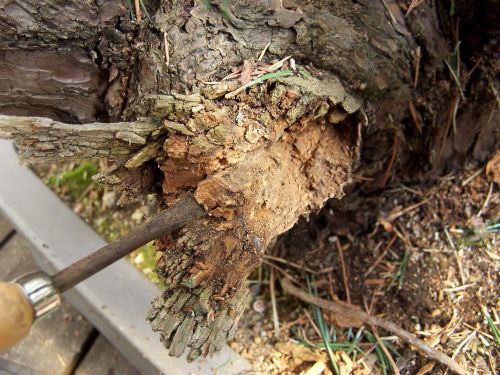
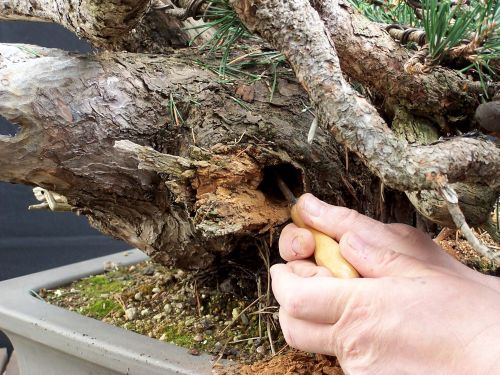
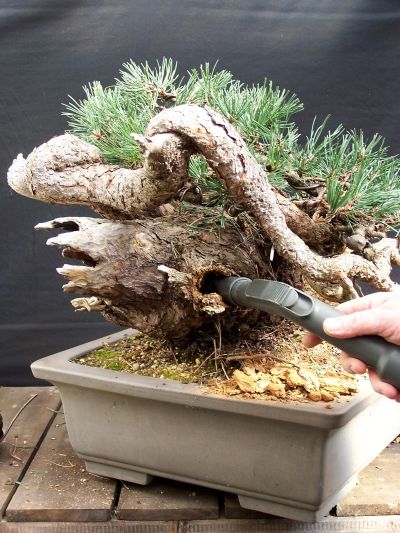
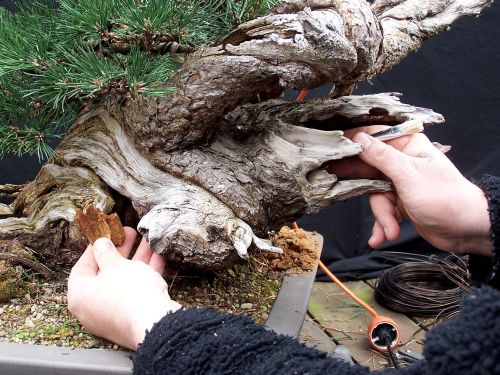
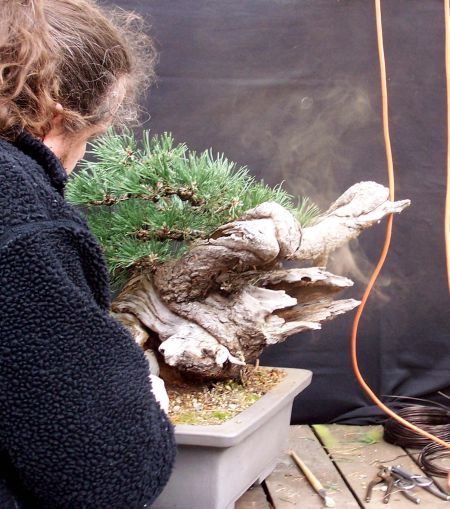
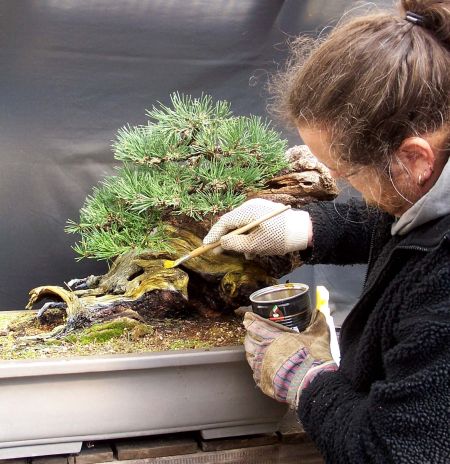
here are some pictures of the deadwood work I did this afternoon. This work was mostly aimed at removing as much rotted wood from the inside of the tree. And then treating the deadwood with lime sulphur. Enjoy the pictures!
Like sucking the eye out off a moose! Hi-hi!
Poking from the right entrance and removing from the middle one!
A very intimate view of the cave-like inside of the “SWAN”. Preventing this fragile section from further decay will be my main worry in the future. As long as I can control that, the tree will outlive me by fare! 🙂
When I was cleaning the inside from the hole in the middle front, the wood dust disappeared from the right side exhaust pipe, like a genie from his lamp!
Although it is with pain in my heart, I do have to protect this deadwood every now and then In the future, to keep things under control. And after I had tasted, the lime sulphur I am applying here, multiple times on the deadwood of this pine, I discovered that this terrible pearly white deadwood will lose it’s unnatural glow very quickly. And I also have some Trix up my sleeve to hurry that proses a little bit more.
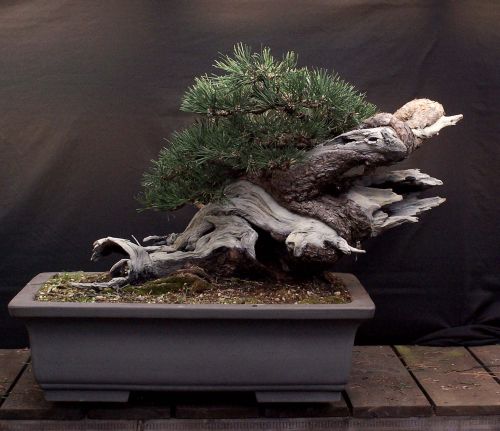
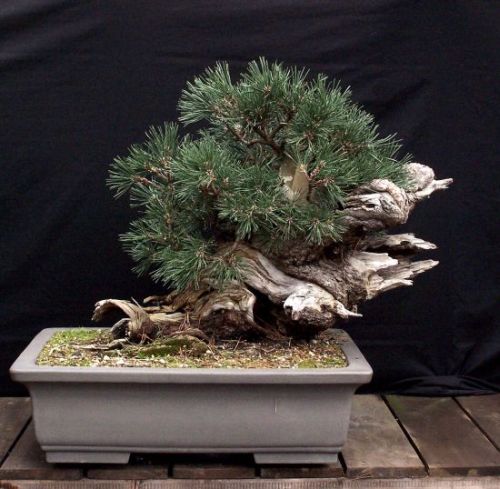
it might have taken me the better part of 2 days, but today I finished the styling of the foliage on “THE SWAN”. The tree was placed just too high for me, to comfortably wire it and I am not able to lift a big tree like this anymore, with the state my back is in at this moment. I might only just start working on Shohin in the future. NOT! 🙂 I had to make some big decisions and a lot of branches had to be removed and replaced by the branches I had allowed to grow especially for this purpose. Just how this all was done, you can read on my website in a few days! Together with the story of the first styling of “THE SWAN”!
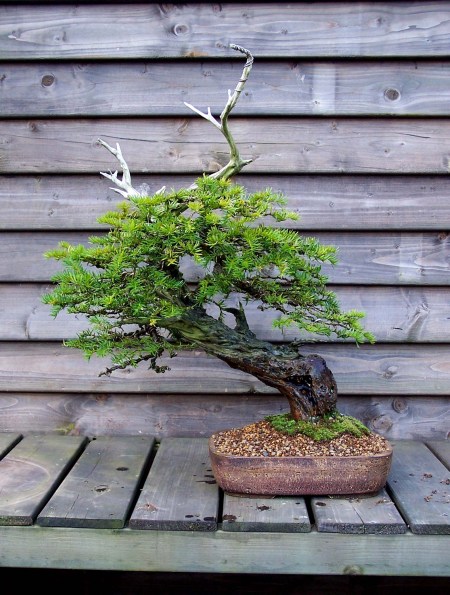
Well, here she is, the new “SWAN”! I am really pleased with the result so far, it is going a lot faster than I had hoped for. The whole tree has so much character and a nice flow to it, the vibrant green foliage leaning on and embracing the massive hollow trunk, with all it’s deadwood, clinging on to live on this weather battered fallen over high mountain pine. It is almost a living JING/JANG symbol I am really Hope you like it so far?
I came across this picture from 1994. It is me repotting (alone) my hudge Celtis Chinensis. This tree “THE LION CRUSHER” was once a proud part of my growing collection those days. I loved this tree, because it was, a tree! You felt dwarfed when you looked at it from close by. It gave me the feeling that I use to feel when I was a little child, playing under need a big tree in the forest. But after 6 years, I had to let it go to warmer places (Frans), it was struggling too much in my cold climate! Being able to show this difficult species at the “Ginkgo Award” was a highlight for me and the tree. I still miss the feel of this real tree in my small garden!Here is another one. Can you tell why this tree is named “THE LION CRUSHER”? Yes or no? Look harder!
today I started working on one of my older trees. It is a Juniperus Chinensis import, that I bought in 1996, at “Crespy Bonsai” in Milan Italy. It is one off the few import trees I have ever bought. This tree has always been a problem child for me, one day everything was just great and the next day it just turned weak. Then I let it recover again into good health, did some mild styling or careful repotting,…and weak again. So now I am trying to style this tree again, back into a Bonsai. I hope that it doesn’t mind it to match this time.
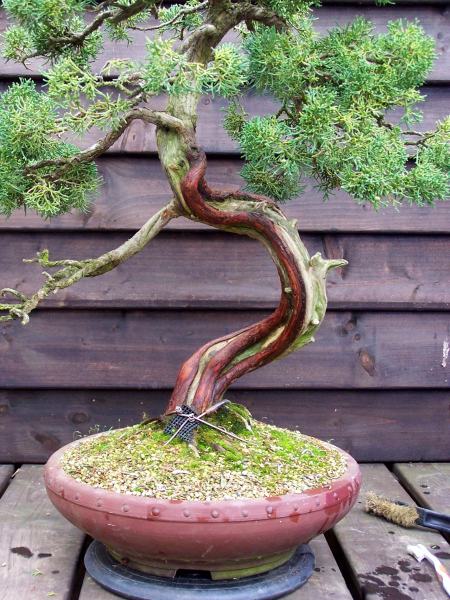
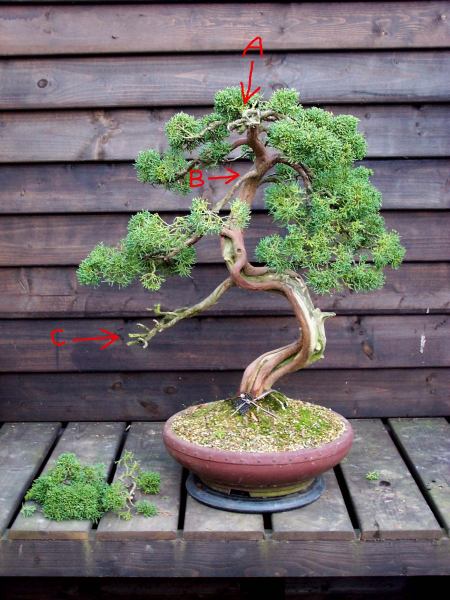
Above picture: The Juniper before my work began.
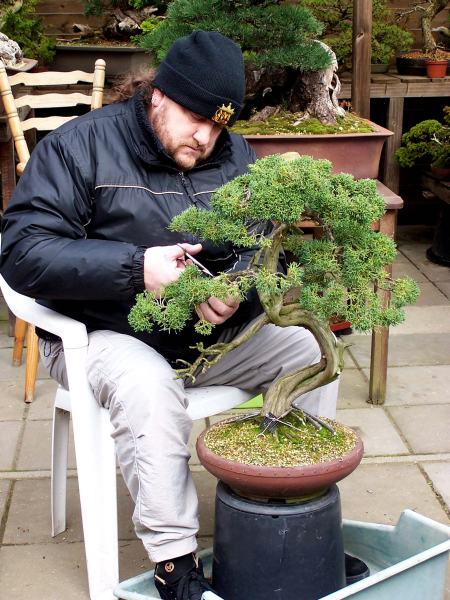
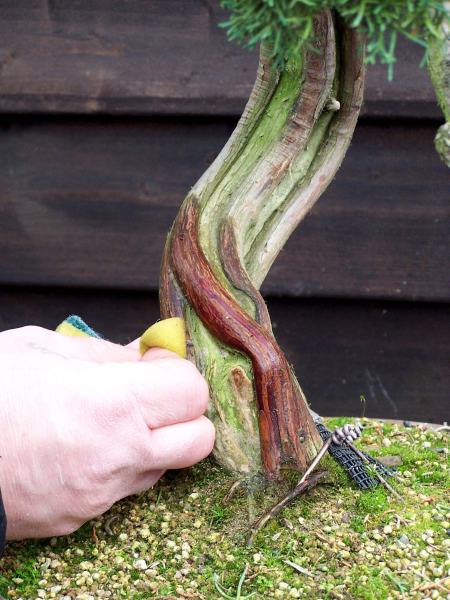
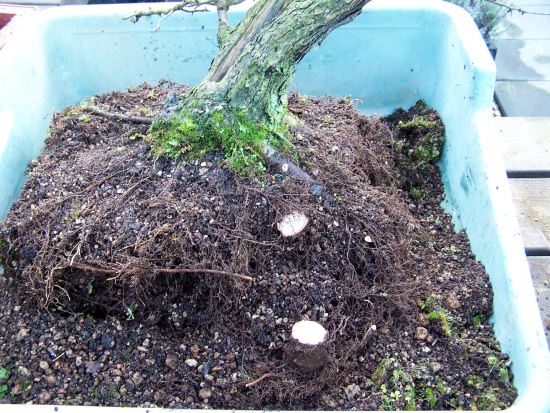
Above pictures: First all the old wire was removed. Then the live parts were cleaned with water, brushes and dish wash sponges with steel wool on one side. I stopped cleaning, as soon as I reached the red colour I was after, making real sure not to harm the sap flow of the tree!
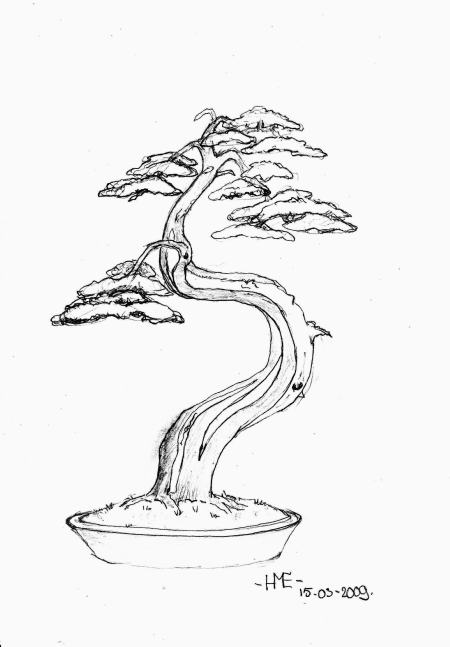
Above pictures: You can appreciate the difference when you look at this picture of the tree after it is cleaned. Then just before dinner time, I made a quick drawing of the idea I have in mind for this Juniper. Now I only can hope for a sunny day tomorrow, so I can work on this tree again!
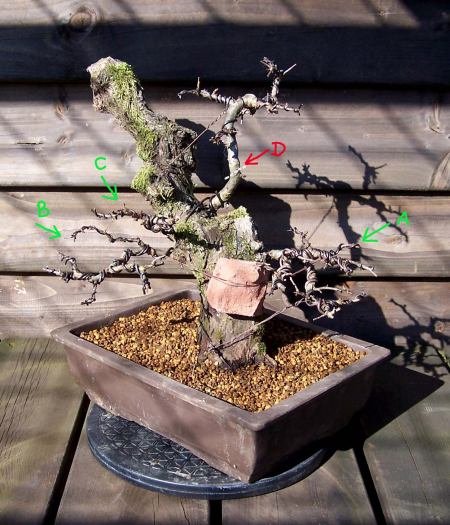
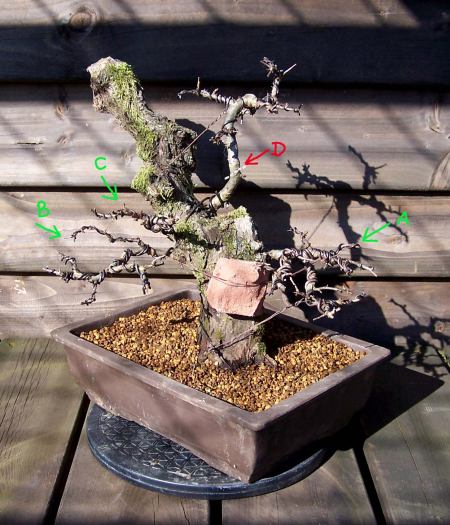
Next day, start cutting! A: The old top was too heavy and leaned too much forward for the design I have in mind. So it was removed, leaving some branch stumps to convert into Jin. B: This too long and thin branch is an eyesore for a long time, so it has to go! C: This long and straight Jin is totally out of place and only distracts, so it has to go!
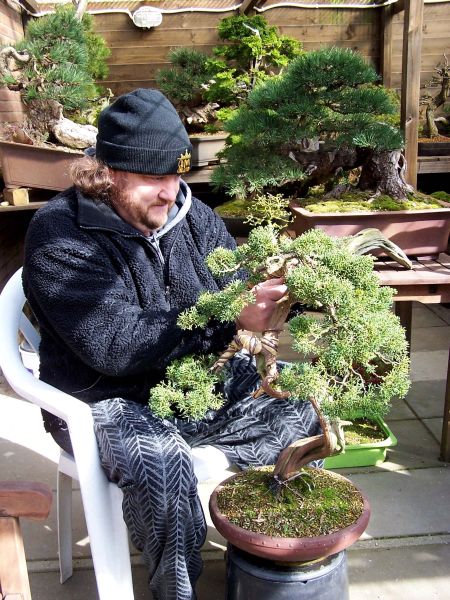
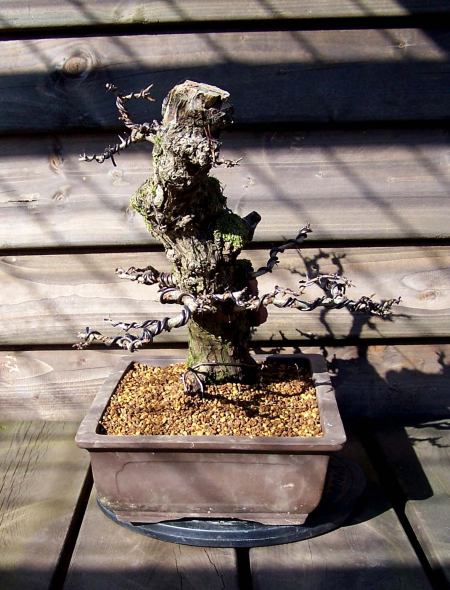
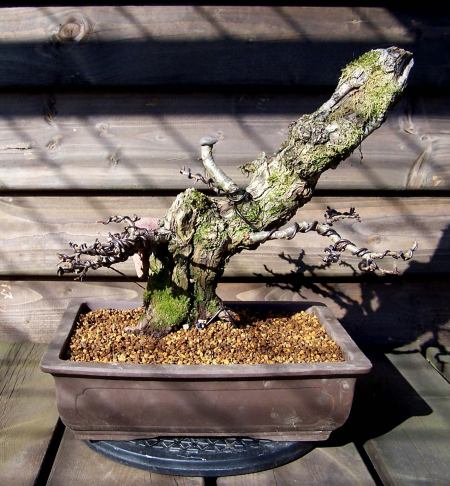
Above pictures: This is the life! 🙂 The long Jin is shortened, the top is Jined, the two left branches are already carefully brought into place and there is a new top. Now some more basic wiring (only larger branches) and than I can bring everything into position!
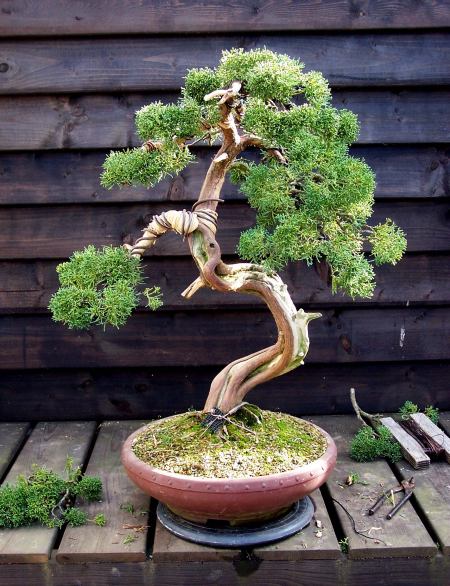
Well, as you can see in this picture, I worked until late in the night and I must say the tree is getting along nicely! Tomorrow I only have some wiring and positioning on the two back branches to do and then I will tread the deadwood with lime sulphur to protect and whitening it again. And then the work is done for this time. I will love this tree until it is nauseous, this growing season! And hopefully, it will stay strong this time!I will post the pictures of the finished work tomorrow!18-3-2009: Today I finished the tree, for now, that is. It was a wonderful sunny day and life was pretty good to me! I cleaned all the deadwood and then treated it with lime sulphur. The last wiring was don and then all the branches were brought into place. There was hardly any small wiring on this tree, only the larger branches were wired. I wanted to protect the growth I have on the tree as much as possible. I am pretty pleased with the result so far, only the straight and the boring top section of the trunk is still an eyesore to me! But this will be solved mostly in the future, as soon as the tree tells me it is still doing fine, I will start to make a Shari on that part. This will connect, story and theme wise, the top of the tree to the bottom part. But this is for the later. When the foliage has grown some more, the top left branch will be brought more in front of that section as well! The first left branch is weak and I might decide to remove it if it those not gets more vigorous this season. I calculated that possibility into this design. This tree needs a lot more work and growth, but it is on it’s way to becoming a Bonsai again! I hope you like it this fare?
please have a guess: what is the link between the trees in the below pictures? 🙂
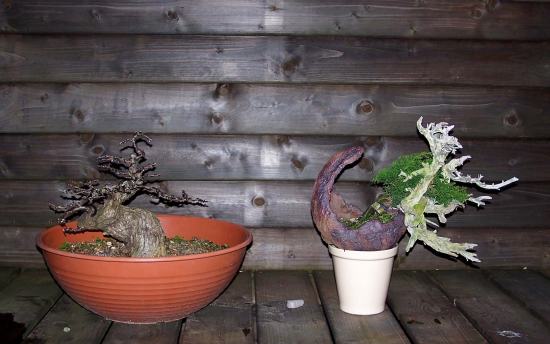
Did you have a guess? The former top off this Dutch “Hawthorn” Yamadori was, after it was cut off 2 years ago, planted in a pot (top left picture). It showed some tiny growth, that later that season mostly died back. But this year the sign of new life is there again! The roots that were cut off 3 years ago, of that same “Hawthorn”, were planted in a pot (left picture) and as you see it is doing fine as well. Will make a nice forest (Clump style) someday! As you can see “Wast not, want not” is a good motto. Hans van Meer.
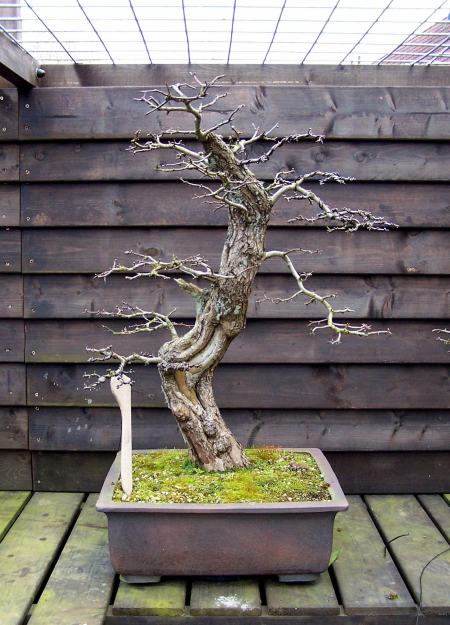
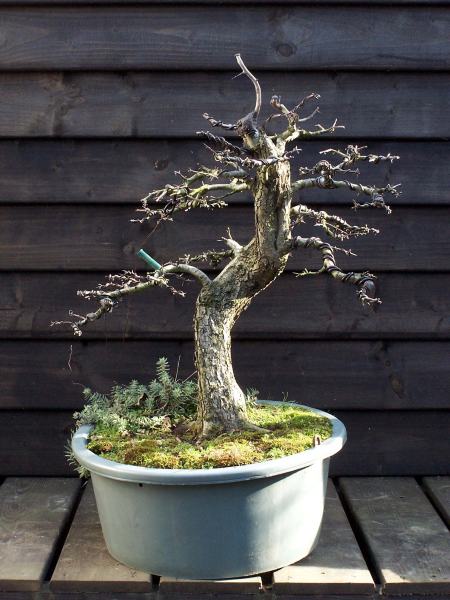
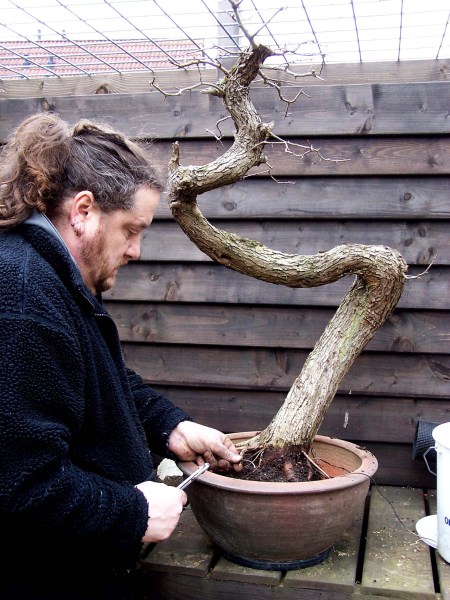
This is a other Dutch “Hawthorn” Yamadori I collected near the North Sea coast line, close to were I live. I collected it because it had a nice root base and a nice gentle curve in the lower part of the trunk. I had to cut down the tree considerably to get to the, more or less, correct height in comparison to the thickness and style of the tree. When I was finished, there was not one single branch left on the tree, . Even my wife told me, I over did it this time! NOT! HIHI! Next season I had plenty long shoots to select my future branches and top from. I wired the branches in there new position and made a new top, in such a way that there would be more taper, in a way the new top would compliment the large wound that was left after the trunk chop! This top wound was connected with the natural Shari that runs down the right top side of the tree. This new top grew so hard that it became to strong, long and thick! So last year I cut off the new top, just above a strong side shoot. This top was planted in a pot and lived, so their is a other nice Shohin saved from the dustbin! 🙂 I than raised the top shoot with wire and created a new top with it. I hollowed out the wound I was left with extra deep, only leaving a ring of bark with cambium. This wall of bark is cut on the NORTH and the SOUTH or EAST AND WEST with a V cut! Now you can fold the 2 bark flab’s together. With a scalpel I will cut away just enough, so they will fit as best as possible together! Than the complete wound was covered with sealing paste and than a piece of plastic was used to hold the two part firmly into place. I have tried this technique, successfully, many times before, but it those not always work as good on all species. But what can I lose? I would have been left with a large scare any way! But if it works? I will be left with a natural looking smaller wound! But that is for the future! First some wiring and than repotting this tree.
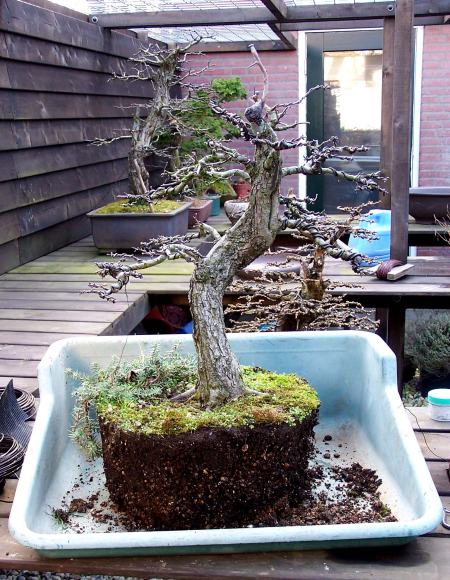
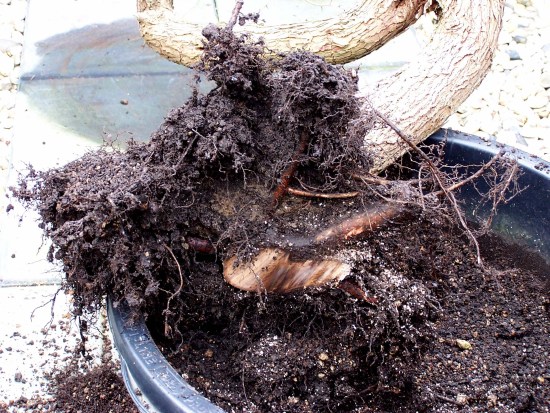
Above pictures: As you can see in the left picture, the tree has filed his former pot with long roots, so it was saved to repot it now and do some drastic root pruning. In the right picture, you can make out the part off the tap root that I left on for safety when I collected it. These backup roots feed the tree, so it can recover from collecting and grow new feeder roots.
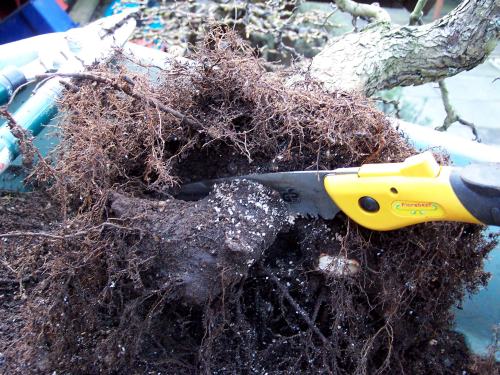
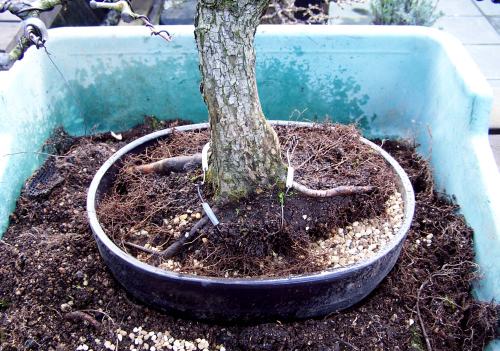
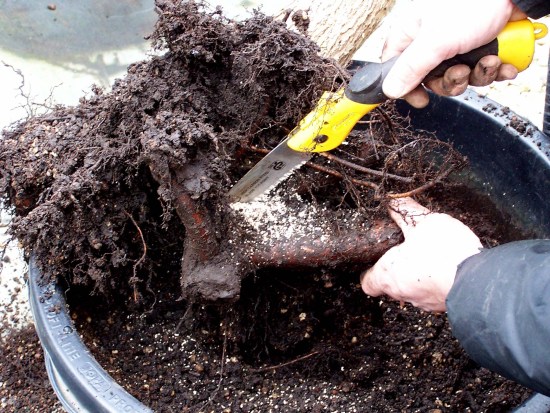
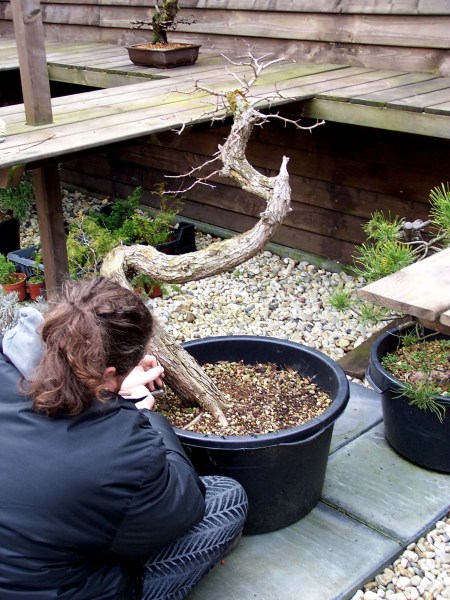
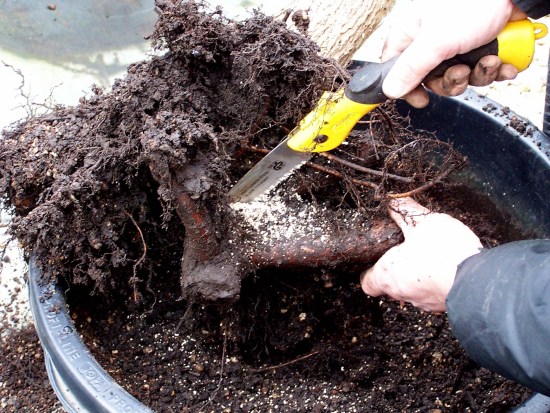
Above pictures: As you can see in the left picture, the tree has made plenty of new roots above this backup root. So it is safe to remove it with a saw! In the right picture, you can see that the tree fits nicely in its new temporary plastic pot. It is firmly secured and now it will be filled with a mixture of Akadama, Kiryu and Bims. These coastal Dutch’s Hawthorns, originally grow in almost pure sand, so I like there mixture to drain extra well!
Above picture: The tree in its temporary plastic pot. I am very pleased with the roots and I think it is possible to plant the tree in a more fitting pot, it’s next repotting! The tree needs a lot more branch growth and structure and overall work. But I do think, looking at the basic as it is now, the tree looks promising to create a nice bonsai from! Time will tell! 🙂
It was just before dinner time and about to get dark, that I realised that I had to still clean up my working area, from the work I had don, that afternoon! From the repoting of the Hawthorn, I kept the little Alpine plant that was growing in the same pot. This Alpine plant was growing in the roots of a Yamadori Pine I bought in the mid-nineties. From that original plant, I repotted some in small pots. The one that has been growing alongside, this Hawthorn, must have landed there by excited. I don’t like to waste anything that’s alive, especially when it is something so pretty as this plant! So I looked for some pots to put the plant in. When I had a brainwave :), I have some beautiful stones from the English shores, that were given to me, by my dear friend Terry Foster, that were not yet used for anything. So I divided the small plant into two and planted it on the rocks in a mix of Kato clay and Akadame dust. I think they look cool now and I have a good reason to display these stunning rocks as well!
While I was making room in my winter shelter, to get to a Hawthorn I needed to work on, I bought this “Itogawa” Tanuki outside. Now just before dark, I bent, without any wire, some of the new growth, trough and under need the deadwood. So It can grow in the right direction. And I think it is starting to make a pretty image. This way, this beautiful piece of deadwood is not lost, but can still be appreciated in this marriage with the vibrant green Juniper. As you can see in the pictures, it was already dark, when I made them! It was about time to go in, and wash up before dinner, Kato clay makes your hands look awful. I could do with some nice Chinese food and a beer, it was a great Bonsai day! 🙂
I like doing those silly little things, just acting on a hunch! 🙂
Here the Juniper is standing next to the Shohin Hawthorn I worked on this afternoon.I only rewired this small Hawthorn and did some repositioning of the branches. I think this little gem is going to be beautiful someday!
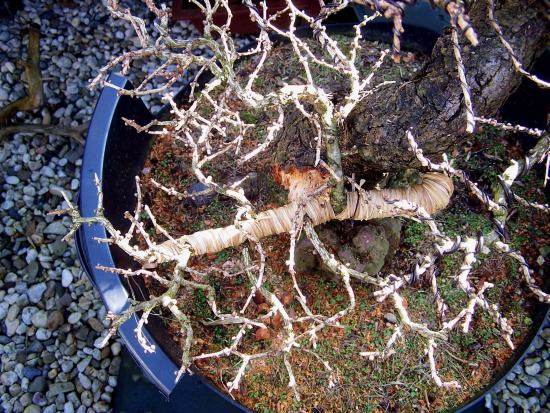
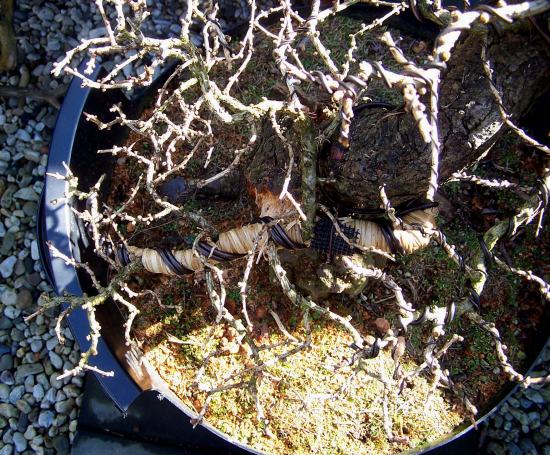
Above pictures: The secondary branch structure is getting better on all the branches, but the straight line of the first branch on the right is bothering me. This is the only older branch on this tree and it needs a bit off help to get some gentle movement. This way it looks less boring and will fit the rest of the branch structure of this tree. Straight lines must be avoided at all times in a successful design, the stick out like a sore thumb! So I wrapped it in water soaked raffia and bent some movement in it.
Above: I know! I’m a tree hugger!
Above pictures: It was hard to place my hands on this branch to bend it, but you can see I managed to great a gentle curve in that straight and thick branch in the end! Now it fits the rest of my branch structure. In Bonsai you have to pay attention to every little detail, even if you think no one will knottiest what you are doing. A lot of small mistakeswill make a big one!
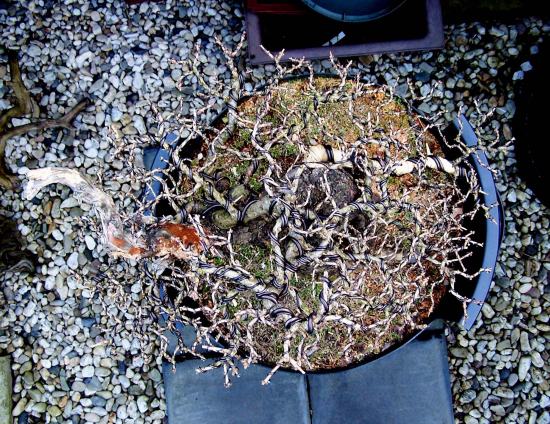
Above: Bird’s eye view of the branch structure.
Above; I made this picture with a backdrop to make the branches stand more out. I am really happy how the image of “X.L” is progressing. I can’t wait to see how he will look in a few weeks, when the brightly, and still very small, green needles start appearing. Then the scale of this old Larch is at it best! Maybe next year, if possible, I will plant him in a nice pot? I hope you like the progress so far?
Some serious bending going on.These roots, on one of my Acer palmatum’s, are begining to look nice.
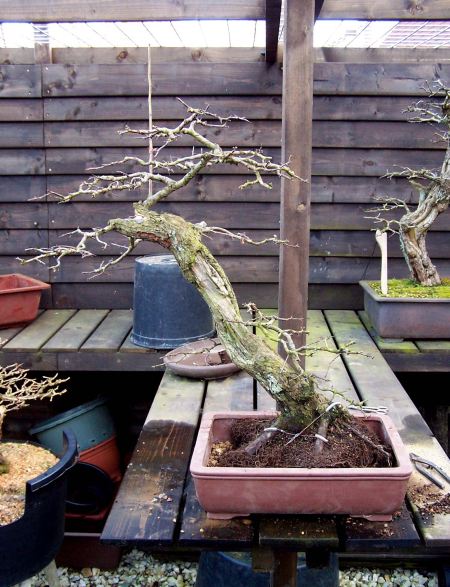
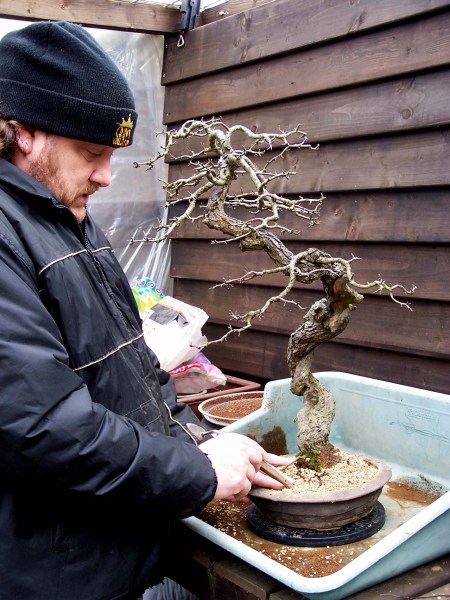
Here the tree is back in it’s old pot, as soon as it is settled down and showing lots off new growth, I will start to wire it again and bring it back into its desired form. I am glad this tree recovered from it’s ordeal so well, it holds a lot of good memories for me!Look how flat the football, consisting of only small feeder roots, is now! This means I can plant it deeper into it’s pot and that the tree will look more balanced in it!Here I am removing more off the old rootstub that was left for safety the last time this old Yamadori “Yew’ was repotted. This “Yew” I found in the U.K, many years ago now and it is the first tree that I ever collected. This tree lost a lot off its vitality 2 years ago and some lower branches on the left were lost, but now it slowly recovered and it was safe to work on the roots again!For now this “Dancer” has a new home, were it can grow into a beautiful lady! 🙂Some promising roots were redirected with wire. Thicker roots were cut back, right up, to about half a Inch away, from were strong, but smaller roots emerge from it. This simple, but sure technique, will be repoted, until the overall roots size, fits inside the planed design for this tree.For now she is planted in a deep pot, with plenty of room to grow. I want a vigures tree, that produces lots of new growt to fill out and style the top section of this future Literati Bonsai.Now I am left with a nice flat rootbase, full of fine feeder roots. This means that at the next repoting, I will be able to plant this tree in a much shalower pot. This wil make here, more elegant and smaller…she is a bit tall! 🙂Here I am removing the extra roots I left on for extra security when I collected this Dutch Yamadori “Hawthorn”.Repotting the “DANCER”.Moments of joy! 🙂Here the tree is planted back into it’s small Brian Albright pot.Side view of the “larch” stumb. 🙂
Here the same tree is planted back into it’s Brian Albright pot.Not me!:) Here is a other Hawthorn with only small feeder roots.Who sad that you could not get, a easy to repot, root system on a Hawthorn?
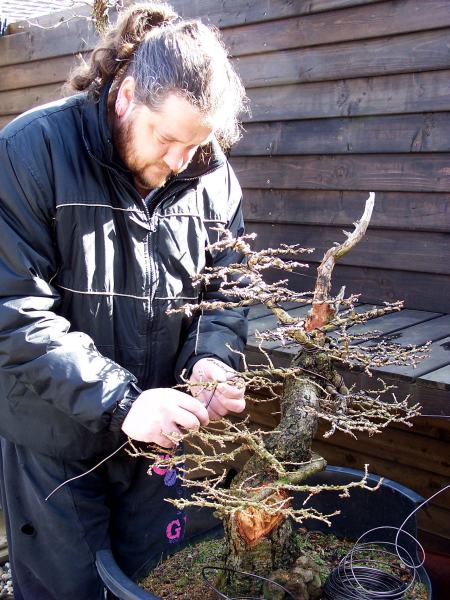
, I know! But I had to take a few steps back from the keyboard and try to focus on the more important things in life, mainly my health! These last few month’s, my back problems have become more severe and kept me more or less away from any real Bonsai work. But I did do some important small styling work and some repotting that could not wait any longer! At this moment I am gladly posting these pictures in the knowledge that there might be a solution for my back problems in the near future. I have found a great Doctor in Belgium that uses a new kind of operating technique! So now I only need the O.K from my insurance company and I am off to Belgium! So keep your fingers crossed for the next couple of days for me! 🙂
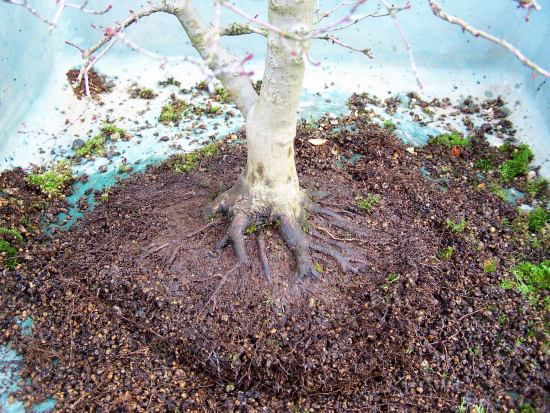
Who said that you could not get, an easy to repot, root system on a Hawthorn?
Not me!:) Here is another Hawthorn with only small feeder roots.
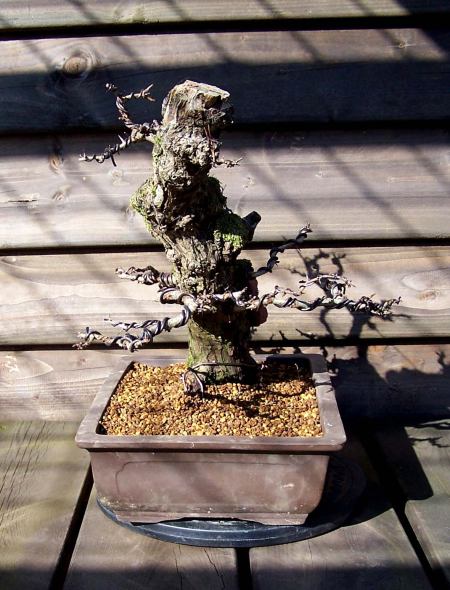
Here the tree is planted back into it’s small Brian Albright pot.
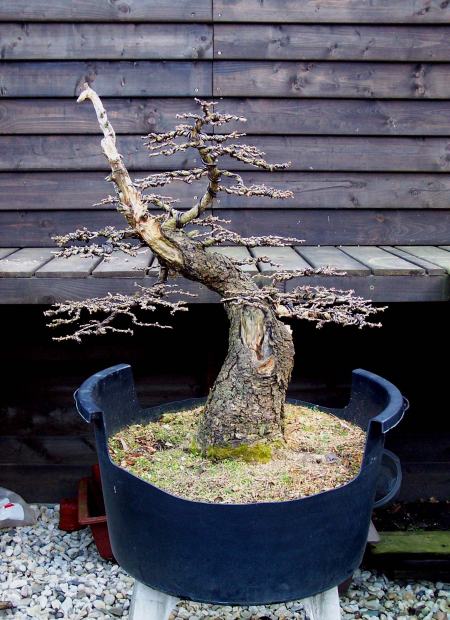
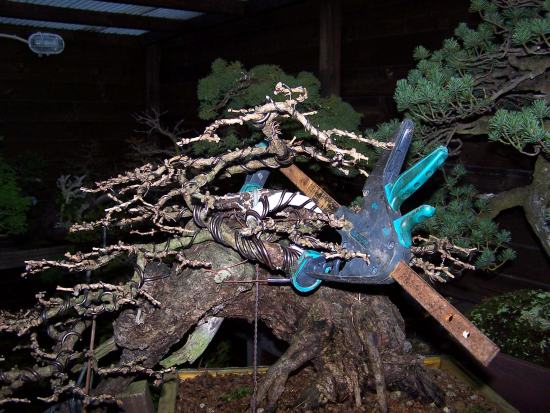
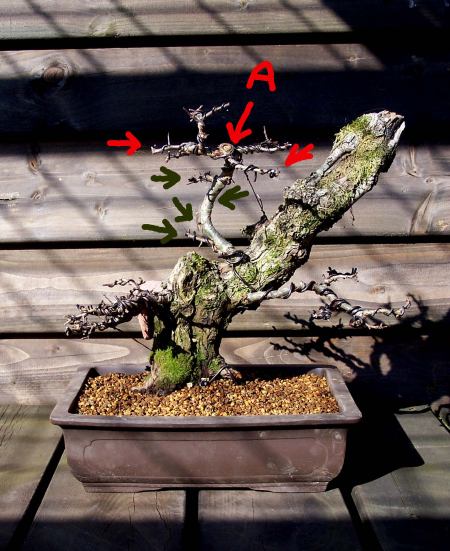
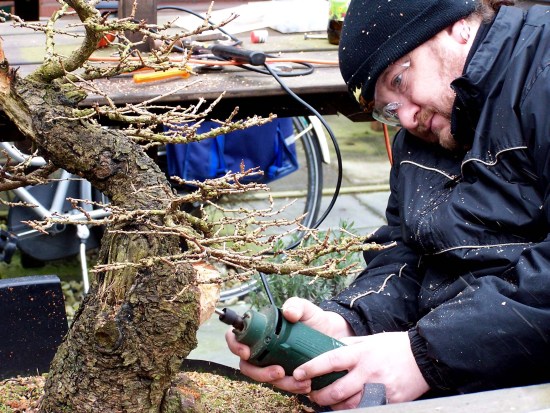
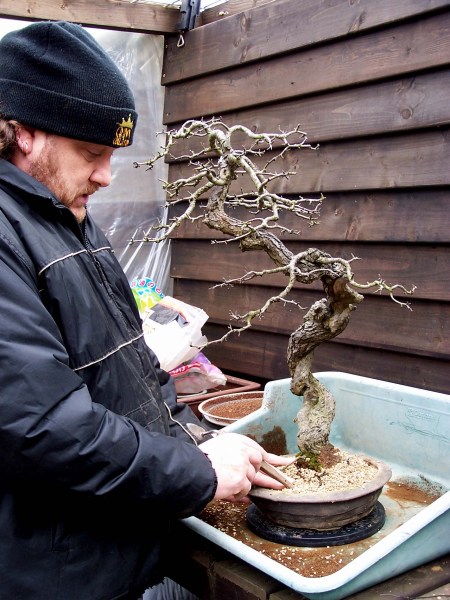
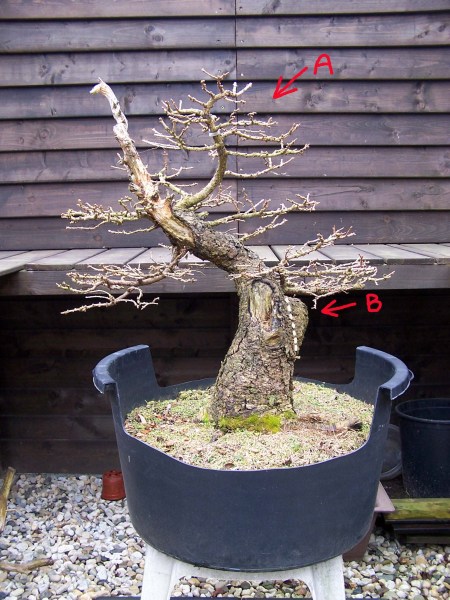
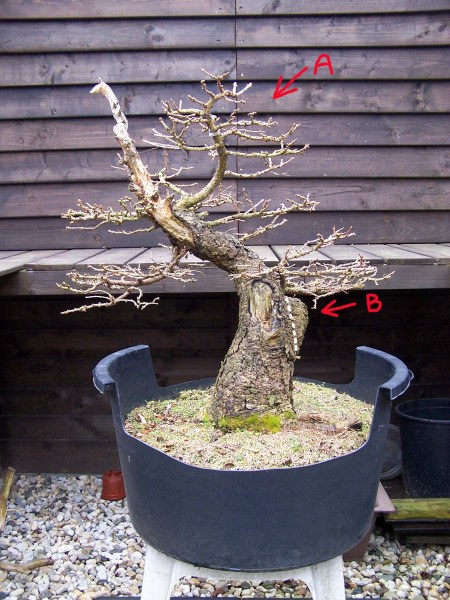
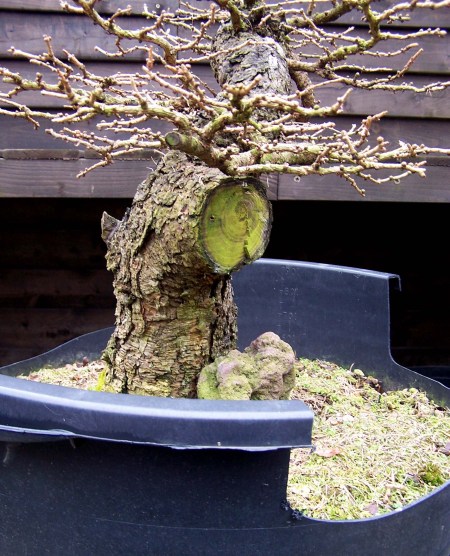
Above: This“Larch” has been completely wireless during the winter months. So, considering the short time I have been working on this tree, I am pretty pleased with how quickly the, mostly new branches, have already settled in their position. Only the (Youngest) top section (A) needs to be repositioned. I had left the Large stump (B) alone for a few seasons, to prevent the risk of dye/dry back in the main trunk. So now it was safe to remove most of it with power and hand tools and then style it in harmony with the spirit of this tree! The white dotted line is more or less the line of the trunk, so a lot of work had to be done to get there!
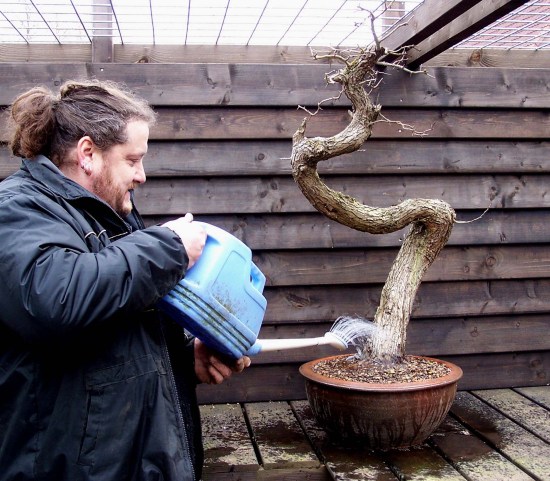
Repotting the “DANCER”.
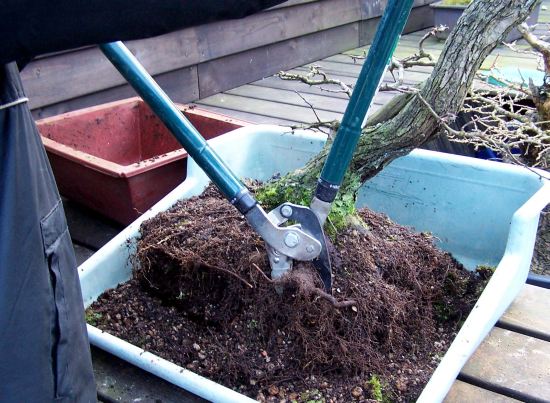
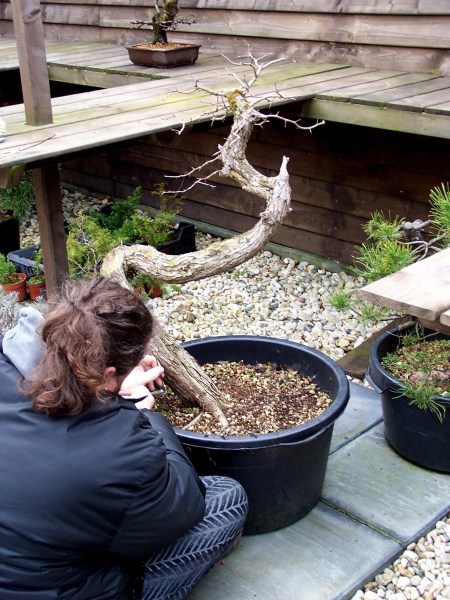
Here I am removing the extra roots I left on for extra security when I collected this Dutch Yamadori “Hawthorn”.Now I am left with a nice flat root base, full of fine feeder roots. This means that at the next repotting, I will be able to plant this tree in a much shallower pot. This will make her, more elegant and smaller…she is a bit tall! 🙂
For now, she is planted in a deep pot, with plenty of room to grow. I want a vigorous tree, that produces lots of new growth to fill out and style the top section of this future Literati Bonsai.
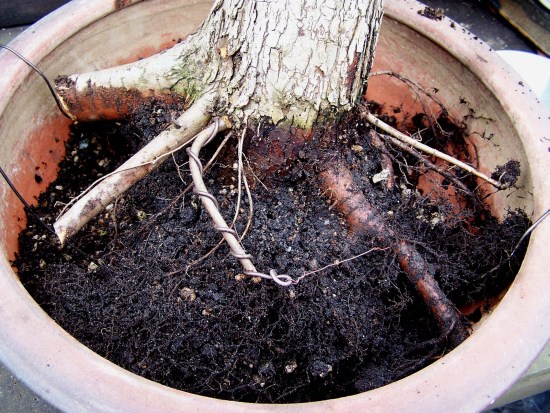
Some promising roots were redirected with wire. Thicker roots were cut back, right up, to about half an Inch away, from were strong, but smaller roots emerge from it. This simple, but sure technique, will be repeated, until the overall roots size, fits inside the planed design for this tree.
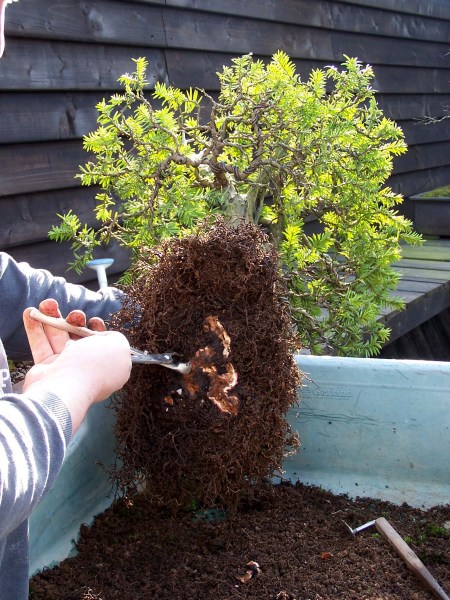
For now, this “Dancer” has a new home, where it can grow into a beautiful lady! 🙂Here I am removing more of the old root stub that was left for safety the last time this old Yamadori “Yew’ was repotted. I found this “Yew” in the U.K, many years ago now and it was the first tree that I ever collected. 2 years ago this tree sadly lost a lot of its vitality and some lower branches on the left were lost, but now it has slowly recovered into good health, so it was safe to work on the roots again!
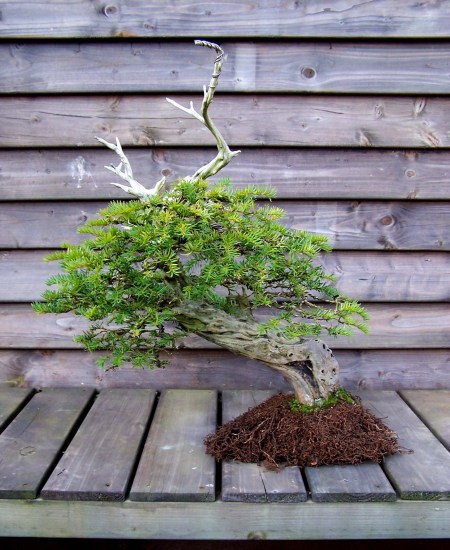
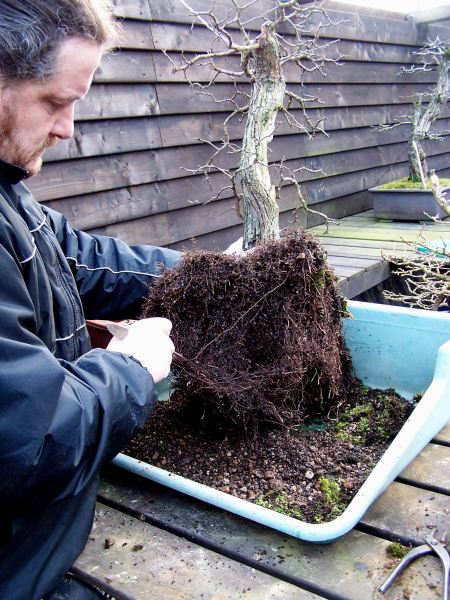
Look how flat the rootball is now, consisting of only small feeder roots! This means I can plant it deeper into its old pot and that the tree will look more balanced in it!
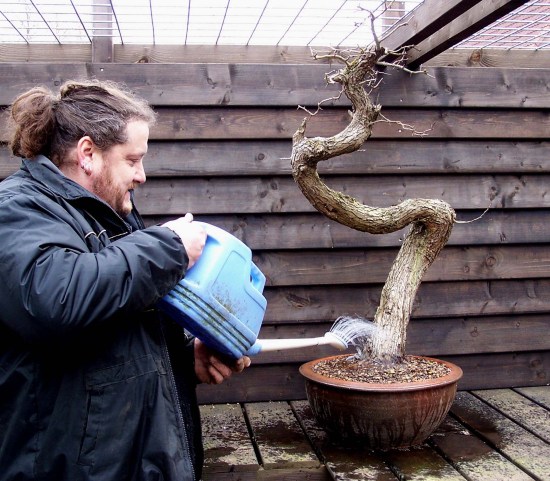
Here the tree is back in its old pot, as soon as it is settled down and showing lots of new growth, I will start to wire it and bring it back into its desired form again. I am glad this tree recovered from its ordeal so well, it holds a lot of good memories for me!
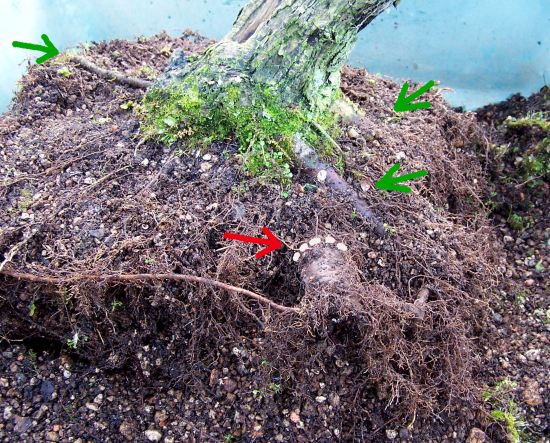
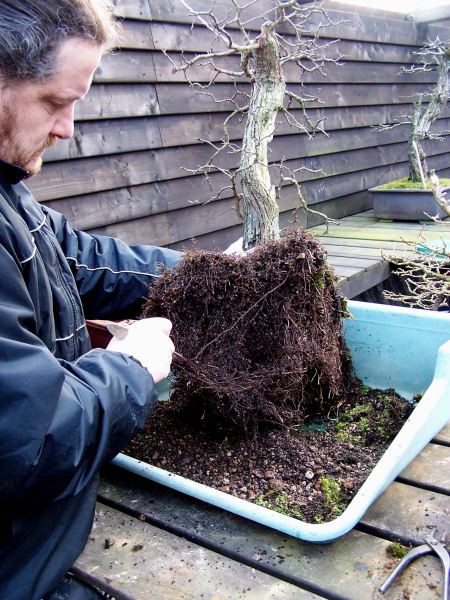
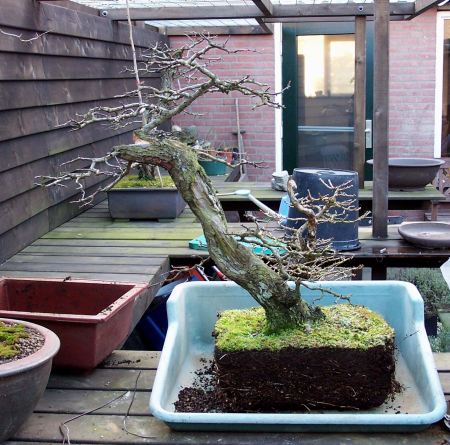
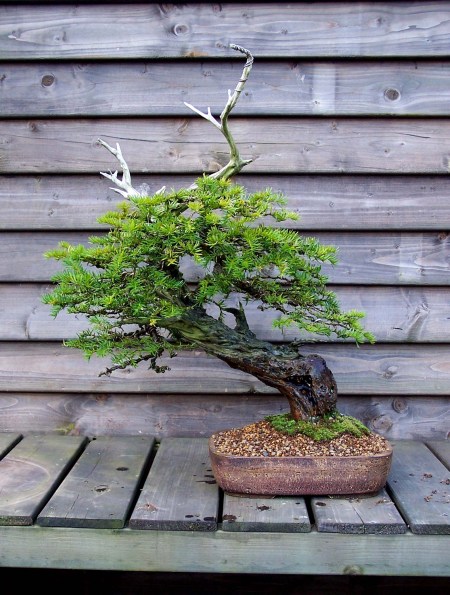
Above: This is the first transplanting for this Dutch “Hawthorn” Yamadori. As you can see the pot is full of healthy roots, so it was safe to remove the too thick root (red arrow) you can see in the second picture. The green arrow in that same picture, show some nice positioned strong roots. The next 2 picture s show how I removed that root. The last picture shows the tree in its new pot for now. For the next couple of seasons, I will concentrate on the growth of the relatively young branches, the need to thicken and mature. And of course, I have to work on the total ramification of the tree. This ugly duckling is quickly becoming one off the favourites trees to work on, in my collection! A couple of years ago I offered it for sale, still as raw material, during a big convention. For a very reasonable price, but nobody seemed to notice this oddly shaped tree, so full of natural mistakes. There and then, I drew a design on a small piece of paper, and afterwards, I gladly took the tree home with me, to style it myself! I have to admit though, it took a lot off imagination and even some optical tricks. But I seem to have overcome, some major design problems. Creating a thing of interest or even beauty, out of not too good material, is something I really love. Because these trees are not too obvious to style, you really have to look for that hidden Bonsai! But when you find it and everything turns out well, you will have a Bonsai that is often so much more interesting than the prefab ones. I enjoy it when a plan comes together! 🙂
Of course, I know, this tree has a very long way to go, but it is growing nicely into a “Mother and child” tree, with a twist. The mother leaning into the wind, protecting the little child that clings to her side, from the prevailing winds that torture the Dutch coastline were I actually collected this tree! I will keep you posted.
These roots, on one of my Acer palmatum, are beginning to look nice.
Above picture: This small tree is also a Dutch “Hawthorn” Yamadori.
Some serious bending going on.
Before We go any further,I would like to say, I am sorry that this post is dragging on so long. But it is the only way I am able to post anything new on my blog!
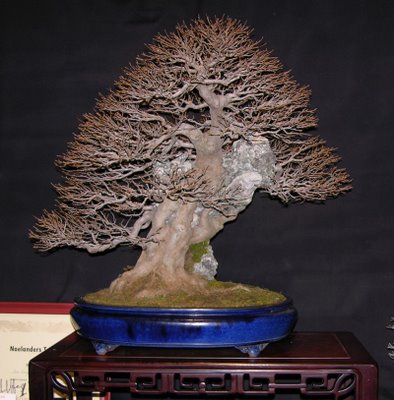
here are some pictures I shot during the “NOELANDERS TROPHY X” last weekend.
The above picture of the winning tree, an Acer buergerianum by Udo Fischer from Germany, is courtesy of my friend Andy “stone monkey” Pearson.
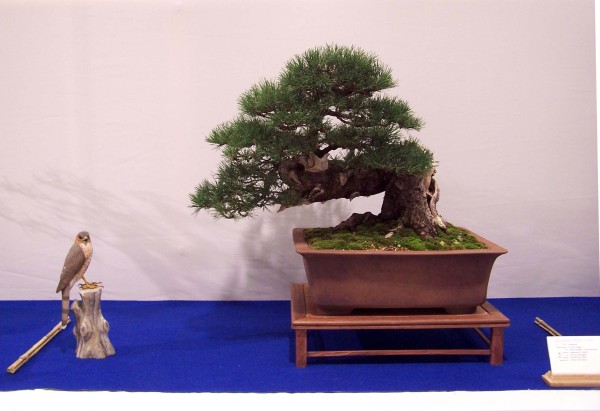
Above: My Mugo Yamadori. Although the current pot is too big and will be replaced by a smaller one in the near future, I do feel that “BIG RON” looked pretty good during this show! This old Mugo Pine can only be repotted into a smaller and more suitable pot when in the future there are enough new small roots. Then I can safely remove a bit more of the large root clump that is hidden under the ground! For now “BIG RON” will be left alone for a few years to grow and mature, he deserves it! 🙂
Above: I was proud to finally be able to show my Chamaecyparis obtusa that I have worked on for so many years. Although it is an imaginary tree, Chama’s don’t grow into this style of a tree or any kind of tree for that matter, I do feel that it’s image of an old and bettered tall spruce-fir like tree is believable. To take full advantage of the lovely fan-like shape of this kind of foliage, I styled it not too strict. The wild foliage together with the many different shades of green creates the feel and image of a tree in the distance. This tree has come a long way indeed!
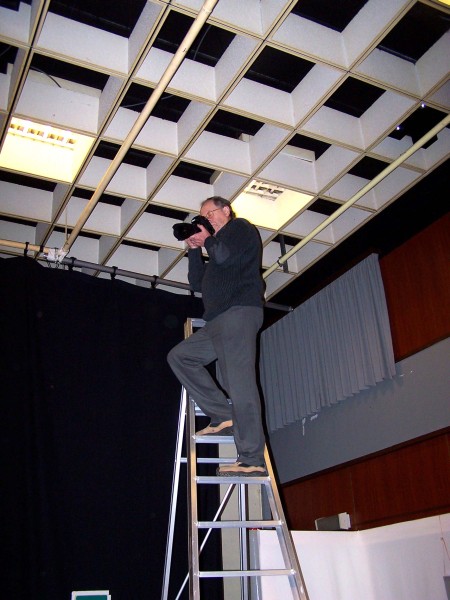
Above: Resident photographer, W. Evenepoel hard at work to shoot a bird’s eye view picture for the commemorative book of this anniversary edition.
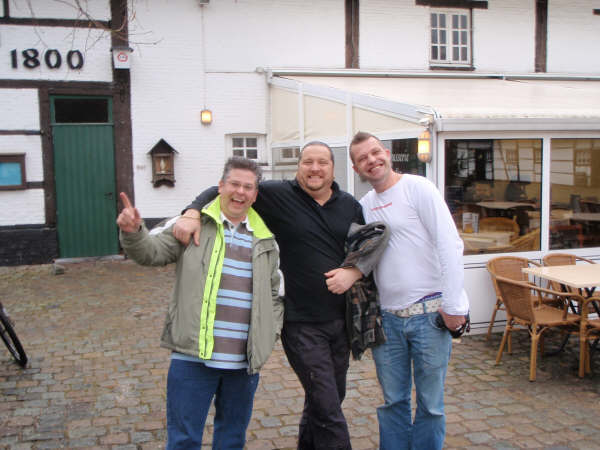
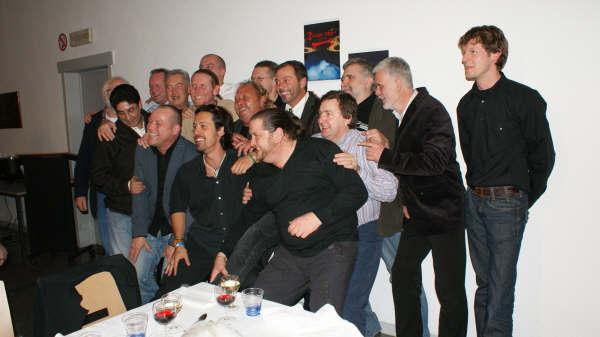
Above: 4 stupid Bonsai friends in Belgium. Left to right, Ed van der Reek, Me, Jeroen Huivenaar and last but not least a close-up view of Rune Kyrdalen.




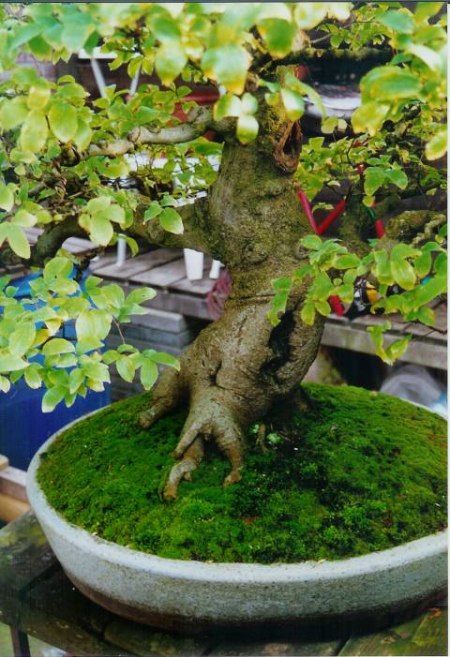







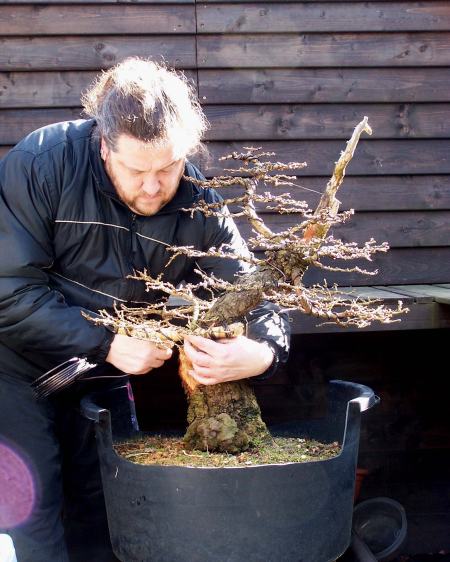





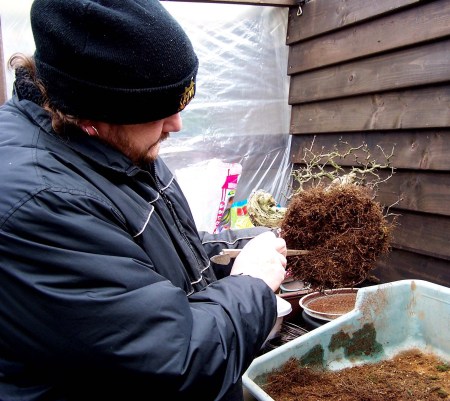
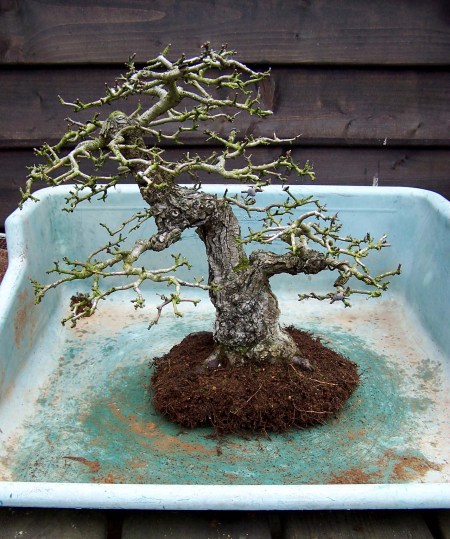
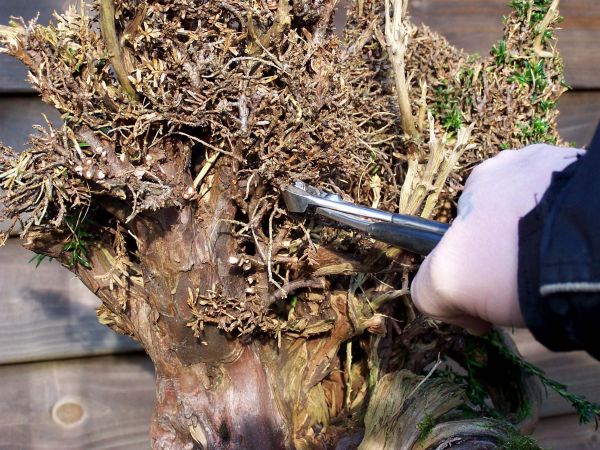
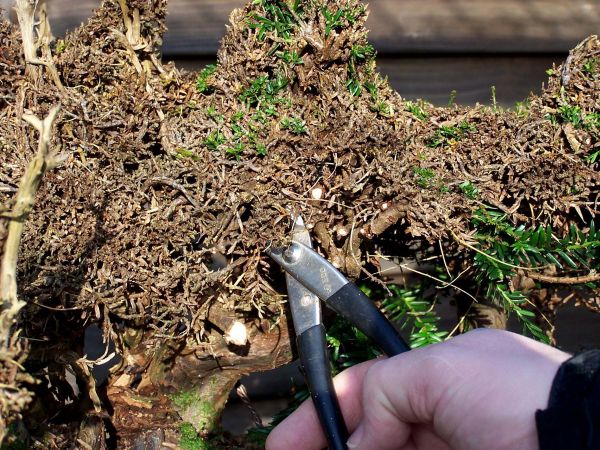
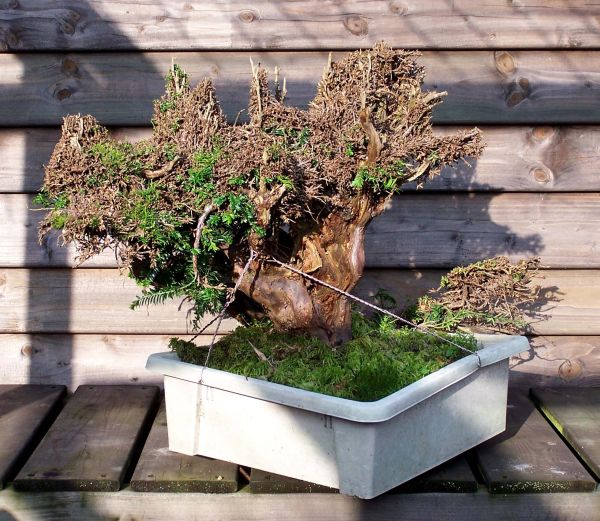
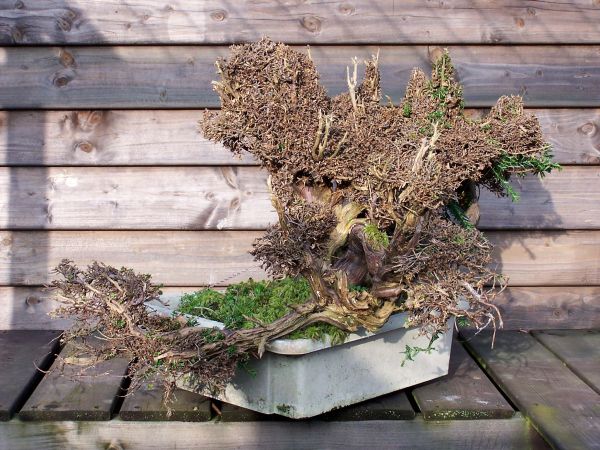
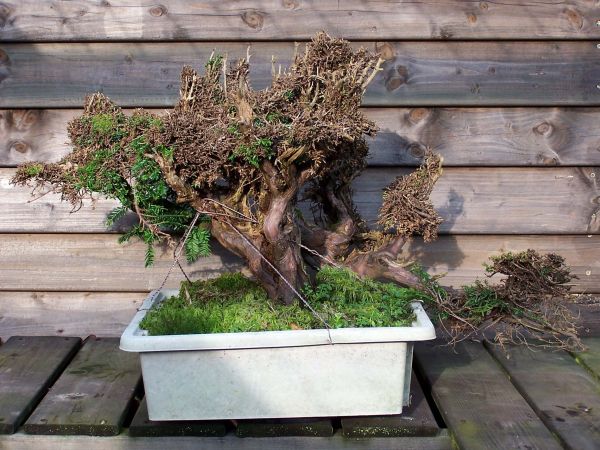
 , I know! But I had to take a few steps back from the keyboard and try to focus on the more important things in life, mainly my health! These last few month’s, my back problems have become more severe and kept me more or less away from any real Bonsai work. But I did do some important small styling work and some repotting that could not wait any longer! At this moment I am gladly posting these pictures in the knowledge that there might be a solution for my back problems in the near future. I have found a great Doctor in Belgium that uses a new kind of operating technique! So now I only need the O.K from my insurance company and I am off to Belgium! So keep your fingers crossed for the next couple of days for me! 🙂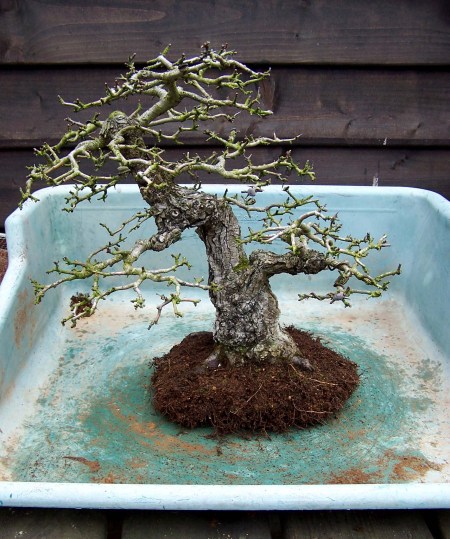








 The Bonsai Blog of Hans van Meer